
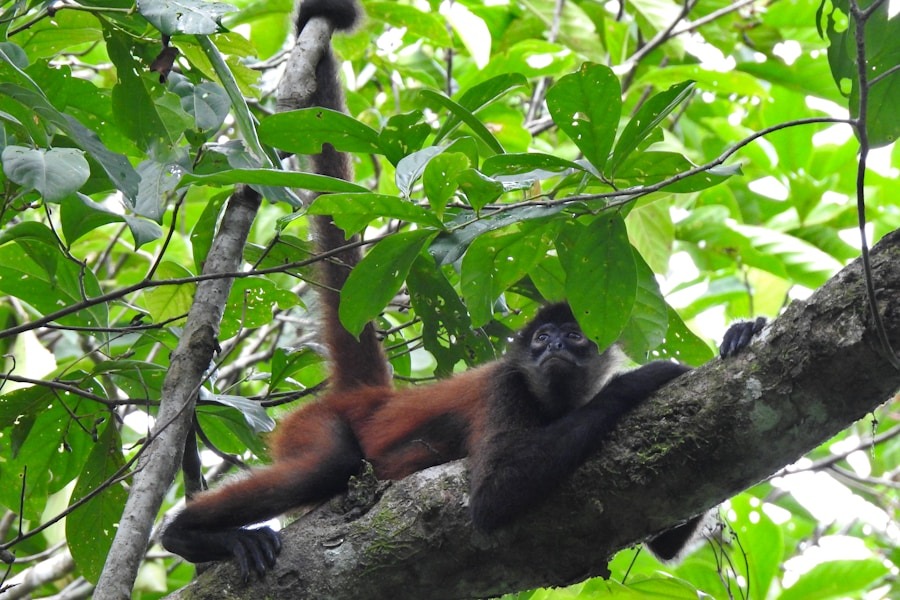
So, you want to know about the howler monkey, the undisputed vocal champion of the Amazon? Well, they’re not just loud; they’re fascinating creatures with a surprisingly big impact on their rainforest home. These primates are known for their incredibly powerful calls, which can travel for miles, announcing their presence and defining their territory. But there’s a lot more to them than just their roar.
The Roaring King of the Amazon: A Closer Look
When you think of the Amazon rainforest, you might picture towering trees, winding rivers, and an incredible diversity of life. Among that life, the howler monkey stands out, not just for its impressive vocalizations, but for its essential role in this vibrant ecosystem. They are the true “kings” of the Amazon’s auditory landscape, their calls a constant, albeit intimidating, soundtrack to the jungle.
Why are they called “howler” monkeys?
The name says it all, really! Their most distinctive feature is their vocal ability. They possess specialized vocal organs that allow them to produce incredibly loud and deep calls. These aren’t just random noises; they’re complex communications used for a variety of purposes.
What makes their calls so powerful?
Part of their vocal prowess comes from a specialized bone in their throat called a hyoid bone. In howler monkeys, this bone is greatly enlarged and hollowed out, acting like a resonating chamber. This amplifies their calls, making them incredibly effective at carrying through dense vegetation and over long distances. Imagine a natural megaphone, and you’re getting close.
Unique Features and Adaptations of the Howler Monkey
Beyond their booming voices, howler monkeys have a range of physical and behavioral adaptations that help them thrive in the complex environment of the Amazon. These features are the result of millions of years of evolution, shaping them into perfectly suited inhabitants of the rainforest canopy.
Diet and Digestive System
Howler monkeys are primarily folivores, meaning their diet consists largely of leaves. This might sound a bit bland, but they are incredibly adept at extracting nutrients from tough vegetation. Their digestive system is remarkably efficient, featuring a specialized gut filled with bacteria that help break down cellulose, the tough stuff in plant cell walls. This allows them to subsist on a food source that most other animals can’t easily digest. They also supplement their diet with fruits and flowers when available, adding variety and crucial nutrients.
Physical Characteristics for Arboreal Life
Living their lives almost entirely in the trees, howler monkeys have evolved for an arboreal existence. They have strong limbs and grasping hands and feet, perfect for navigating the forest canopy. Their prehensile tails are another key adaptation; it acts like a fifth limb, providing balance and an extra anchor as they move through branches. This tail is so strong and dextrous that they can even hang from it for extended periods while feeding.
Camouflage and Predation
While their calls can make them quite noticeable, their coloration offers a degree of camouflage within the dappled sunlight of the rainforest. Different species have varied fur colors, from reddish-brown to black and golden-brown, which can help them blend in with the foliage. Despite their size and powerful calls, they still have predators, including jaguars, eagles, and large snakes. Their loud calls can serve as an early warning system, not just for other howlers, but for other animals in the vicinity as well.
The Role of Howler Monkeys in the Ecosystem of the Amazon Rainforest
It’s easy to focus on their sound, but howler monkeys play a much more significant role in the Amazonian ecosystem than just being loud. They are active participants in the life of the rainforest, influencing its structure and health in several ways. Learn more about howler monkeys here.
Seed Dispersal
As they move through the forest and consume fruits, howler monkeys are important agents of seed dispersal.
They eat fruits and then, through their droppings, deposit the seeds in new locations, often far from the parent tree. This helps to maintain plant diversity and allows for the regeneration of the forest. Imagine them as tiny, furry gardeners, unknowingly planting the seeds for the next generation of trees.
Herbivory’s Impact
Their leaf-eating habits also have an impact.
By consuming large amounts of foliage, they can influence the growth and density of certain plant species. This herbivory creates a balance, preventing any single plant type from completely dominating. It’s a subtle but important role in shaping the forest’s composition.
Indicators of Forest Health
Because they rely on a healthy and diverse forest for their survival, howler monkeys can also serve as indicators of overall ecosystem health.
A thriving population often suggests a healthy environment with ample food sources and suitable habitat. Conversely, declining populations can signal problems like deforestation or habitat fragmentation.
Howler Monkey Behavior and Social Structure
| Behavior | Social Structure |
|---|---|
| Diurnal | Live in groups of 10-15 individuals |
| Arboreal | Highly social and communicate through loud howls |
| Frugivorous | Alpha male leads the group and maintains order |
| Territorial | Strong bonds between group members |
Understanding howler monkeys involves delving into their social lives and daily routines. They are not solitary creatures; they live in complex social groups that have their own dynamics and rules.
Group Dynamics and Hierarchy
Howler monkeys typically live in groups called troops, which can range in size from a few individuals to over twenty. These troops are usually made up of multiple adult males and females, along with their offspring. While there isn’t usually a strict, rigid hierarchy like in some other primate species, there are often dominant individuals who play a role in decision-making for the group, such as leading foraging expeditions or defending territory.
Daily Routines and Communication
Their days are largely dictated by the need to forage for food and rest. They are generally active during the day, spending a significant portion of their time chewing on leaves and fruits. Communication within the troop relies on a combination of vocalizations and body language. While the loud howls are for long-distance communication, they also use softer calls, grunts, and facial expressions for more intimate interactions within the group. Grooming is also an important social bonding activity.
Territoriality and Defense
Their loud roars play a crucial role in establishing and defending their territory. Each troop has a defined area they consider theirs, and the howls serve as a warning to other troops to stay away. This territorial behavior helps to reduce competition for food and resources, ensuring the well-being of the group. When territories are encroached upon, vocal disputes can escalate into aggressive displays.
Threats and Conservation Efforts for Howler Monkeys in the Amazon Rainforest

Despite their resilience, howler monkeys face numerous challenges in their native habitats. These threats are largely human-induced, highlighting the impact our actions have on even the most seemingly robust species.
Habitat Loss and Fragmentation
The biggest threat by far is habitat loss due to deforestation for agriculture, logging, and infrastructure development. As forests are cleared, howler monkeys lose their food sources and the very trees they call home. Habitat fragmentation, where large areas of forest are broken up into smaller, isolated patches, is also a major problem. This can isolate troops, making it harder for them to find mates and leading to reduced genetic diversity.
Poaching and Illegal Pet Trade
While not as prevalent as for some other primates, howler monkeys can also be victims of poaching for bushmeat or for the illegal pet trade. The pet trade, in particular, can be devastating as young monkeys are often taken from their mothers, leading to the death of both.
Conservation Initiatives
Fortunately, there are ongoing conservation efforts aimed at protecting howler monkeys and their habitat. These include the establishment of protected areas and national parks, which serve to preserve critical forest ecosystems. Researchers are also working to understand howler monkey populations better, monitoring their numbers and identifying key areas for conservation. Community involvement is also vital, as local populations are often the first line of defense for these animals. Educating people about the importance of howler monkeys and the threats they face is a key part of these efforts.
The Importance of Howler Monkeys in Indigenous Amazonian Cultures
Throughout the Amazon, indigenous communities have coexisted with howler monkeys for centuries, and their presence is deeply woven into cultural narratives and traditional knowledge. They are more than just animals; they hold symbolic and practical significance.
Traditional Beliefs and Mythology
Many indigenous groups have stories and legends that feature howler monkeys. These often relate to their powerful calls, sometimes attributing them to spirits or ancestors. These narratives help to explain the natural world and instill a sense of respect for the animals within their environment. Their roars might be seen as warnings, omens, or even as the voices of the forest itself.
Ethnobotanical Knowledge
Indigenous peoples often possess a wealth of knowledge about the plants and animals of the Amazon. They may have specific uses for plants that howler monkeys also consume, and observing the monkeys can sometimes reveal insights into the properties of these plants. This traditional ecological knowledge is invaluable and underscores the interconnectedness of life in the rainforest.
Role in Cultural Practices
In some cultures, howler monkeys may be incorporated into ceremonies or rituals, either directly or symbolically. Their strength and commanding presence can be admired and emulated in various ways. Their continued presence is a marker of a healthy rainforest, and its decline can be seen as a negative omen for the cultural traditions tied to it.
Observing Howler Monkeys in their Natural Habitat: Ecotourism and Conservation in the Amazon Rainforest
For those who want to experience the magic of the Amazon and hear the roar of the howler monkey firsthand, ecotourism offers a responsible way to do so. It’s an opportunity to connect with nature while supporting conservation efforts.
Responsible Ecotourism Practices
When planning a visit to see howler monkeys, it’s crucial to choose tour operators who prioritize responsible ecotourism. This means respecting the animals and their habitat. Guides should be knowledgeable about the monkeys’ behavior and ensure that tours do not disturb the animals or their environment. Keeping a safe distance, avoiding feeding them, and minimizing noise are all important practices.
The Role of Ecotourism in Conservation
Well-managed ecotourism can provide direct financial benefits to local communities and conservation initiatives. Revenue generated from responsible tourism can fund park protection, research, and community development projects. When local people see the economic benefits of protecting the rainforest and its wildlife, they become more invested in conservation. Seeing howler monkeys in their natural environment can also foster a deeper appreciation for these animals and the importance of preserving their habitat.
What to Expect When Observing
If you are lucky enough to encounter howler monkeys, be prepared for their powerful vocalizations. You might hear them before you see them, their roars echoing through the trees. When you do see them, observe from a respectful distance. They are often seen feeding in trees or resting, their large bodies quite prominent in the canopy. Remember, you are a visitor in their home, and observing them with care and admiration is the best way to experience their presence.
FAQs
1. What are some unique features and adaptations of the howler monkey?
The howler monkey is known for its prehensile tail, which it uses for grasping branches and hanging from trees. It also has a specialized digestive system that allows it to efficiently process the tough, fibrous leaves it consumes. Additionally, the howler monkey has a large, specialized voice box that enables it to produce incredibly loud, distinctive calls.
2. What is the role of howler monkeys in the ecosystem of the Amazon Rainforest?
Howler monkeys play a crucial role in the Amazon Rainforest ecosystem as seed dispersers. They consume a variety of fruits and leaves, and as they travel through the forest, they deposit seeds in their feces, helping to regenerate and maintain the diverse plant life of the rainforest.
3. What are some threats to howler monkeys in the Amazon Rainforest, and what conservation efforts are in place to protect them?
Threats to howler monkeys in the Amazon Rainforest include habitat loss due to deforestation, hunting, and the illegal pet trade. Conservation efforts include the establishment of protected areas, initiatives to combat illegal wildlife trade, and community-based conservation projects that involve local indigenous communities.
4. How do howler monkeys behave and what is their social structure like?
Howler monkeys are primarily arboreal and spend the majority of their time in the trees. They live in groups, or troops, typically consisting of several females, their offspring, and a few males. The males are responsible for defending the group’s territory and often engage in vocal displays to communicate with neighboring troops.
5. What is the significance of howler monkeys in indigenous Amazonian cultures, and how are they involved in ecotourism and conservation efforts?
Howler monkeys hold cultural significance in many indigenous Amazonian communities, where they are often revered as symbols of strength and wisdom. In recent years, howler monkeys have also become a focal point for ecotourism, with responsible tourism initiatives offering opportunities to observe these primates in their natural habitat while supporting conservation efforts and local communities.