
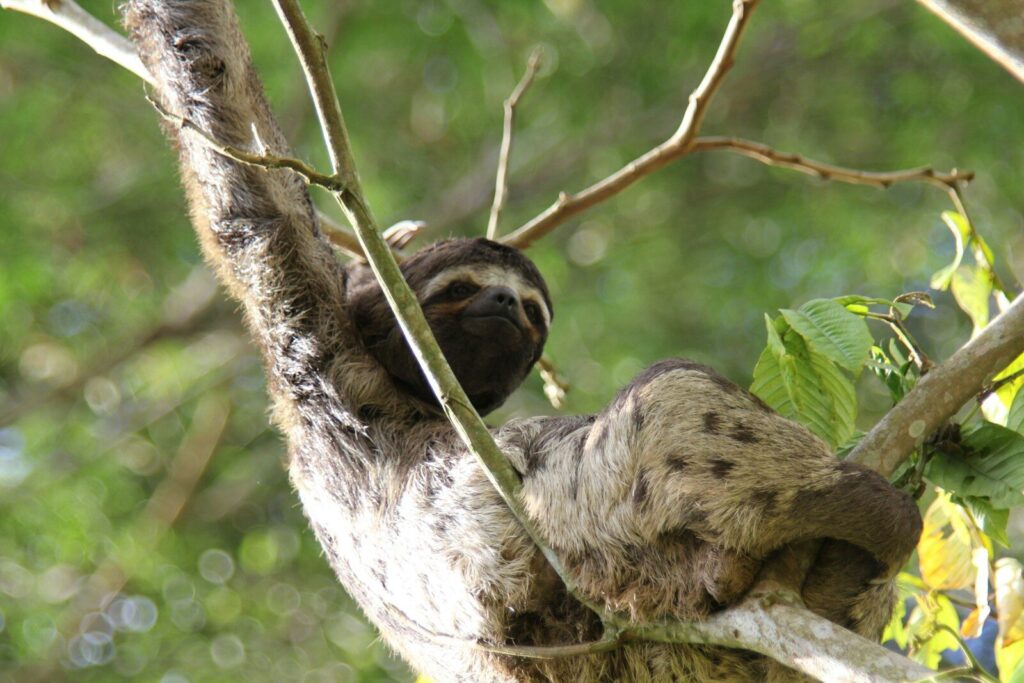

The Canopy’s Quiet Observer: A Full Day in the Neotropical Canopy
Life in the neotropics operates at a frenetic pace for most creatures, but the Sloth approaches survival entirely differently. As one of the most enigmatic Amazon rainforest animals, this arboreal mammal survives by conserving energy to an extreme degree. Observing a full 24 hours in Amazon environments through the perspective of this deliberate creature reveals a hidden world of symbiotic relationships, advanced camouflage, and sheer patience. Unlike the rapid movements of monkeys or the swift flights of harpy eagles, a sloth ecosystem is micro-focused, often revolving around just a few individual trees over a lifespan. Exploring the sloth daily life provides profound insights into how extreme adaptation—specifically an incredibly low metabolic rate and specialized anatomical features—can conquer the dense, competitive canopy of the world’s largest rainforest. According to research published by the Smithsonian’s National Zoo & Conservation Biology Institute, their slow pace is a highly successful evolutionary strategy that allows them to thrive on a low-calorie, toxic leaf diet that other herbivores cannot process.
Chronological Observation Journey
- 06:00 AM – Dawn Breaks Over the Canopy
- 07:00 AM – Solar Basking for Thermoregulation
- 08:00 AM – Selecting the First Foliage Meal
- 09:00 AM – Activating the Multi-Chambered Stomach
- 10:00 AM – Algae Camouflage in the Morning Sun
- 11:00 AM – Navigating the Dense Lianas
- 12:00 PM – Deep Midday Canopy Slumber
- 01:00 PM – Evading the High-Flying Harpy Eagle
- 02:00 PM – Fostering the Sloth Moth Symbiosis
- 03:00 PM – Hydration Through Ambient Humidity
- 04:00 PM – Preparing for the Treacherous Descent
- 05:00 PM – Reaching the Dangerous Forest Floor
- 06:00 PM – Fertilizing the Host Cecropia Tree
- 07:00 PM – The Vulnerable Climb Back to Safety
- 08:00 PM – Transitioning to the Nocturnal Shift
- 09:00 PM – Enduring the Tropical Rain Showers
- 10:00 PM – Night Monkey Canopy Encounters
- 11:00 PM – Continuous Slow Nocturnal Digestion
- 12:00 AM – Navigating Deep REM Sleep Phases
- 01:00 AM – Mother and Infant Nocturnal Bonding
- 02:00 AM – Anchoring Against Strong Canopy Winds
- 03:00 AM – Stealth Tactics Against Night Predators
- 04:00 AM – Adapting to the Pre-Dawn Chill
- 05:00 AM – Resting Before the New Cycle Begins
06:00 AM – Dawn Breaks Over the Canopy

As the first rays of sunlight pierce the dense, mist-covered emergent layer of the jungle, the sloth ecosystem slowly awakens. While macaws scream and howler monkeys begin their territorial roars, the sloth remains nearly motionless. Covered in morning dew, it opens its eyes to assess the immediate surroundings. Because their muscle mass is only about 25% of their total body weight, sudden movements are impossible. The primary goal at this hour is simply to stretch stiff limbs gradually and prepare the body for the day’s minimal activities.
| Time Segment | Primary Activity | Energy Expenditure |
|---|---|---|
| 06:00 AM – 06:59 AM | Waking and spatial orientation | Extremely Low |
07:00 AM – Solar Basking for Thermoregulation
Unlike most mammals that can internally regulate their body temperature efficiently, these creatures have poor thermoregulation abilities. By seven in the morning, they slowly reposition themselves on high branches to catch direct patches of sunlight. This behavioral thermoregulation is vital for their sloth daily life, as elevating their core temperature is required to kickstart the bacteria in their stomachs that ferment the tough leaves they ate the day before. Without the sun’s warmth, their digestion could completely stall, leading to starvation despite a full stomach.
| Physiological Need | Behavioral Adaptation | Ecosystem Requirement |
|---|---|---|
| Temperature Regulation | Sun basking in canopy gaps | Direct sunlight access |
08:00 AM – Selecting the First Foliage Meal
Once adequately warmed, the long process of foraging begins. With limited eyesight, they rely heavily on spatial memory and an acute sense of smell to locate their preferred food source, often the leaves of the Cecropia tree. They do not eat just any leaf; they meticulously select younger, more tender leaves that contain fewer toxins and are easier to break down. Using their elongated claws, they hook a branch and draw it toward their mouth, spending upwards of an hour consuming a small handful of foliage.
| Dietary Focus | Sensory Reliance | Feeding Speed |
|---|---|---|
| Young, low-toxin leaves | Smell and touch over vision | 1 leaf every few minutes |
09:00 AM – Activating the Multi-Chambered Stomach
By mid-morning, the newly ingested leaves enter a complex, multi-chambered stomach that can account for up to a third of the animal’s entire body weight when full. The sloth ecosystem inside its own body is fascinating; symbiotic bacteria and protozoa work tirelessly to ferment the fibrous cellulose. This process generates a slow, steady trickle of energy, perfectly matched to the animal’s lethargic lifestyle. Processing a single leaf can take anywhere from a week to a month, dictating their entirely stationary pace.
| Anatomical Feature | Digestive Mechanism | Processing Time |
|---|---|---|
| Multi-chambered stomach | Bacterial fermentation | Up to 30 days per meal |
10:00 AM – Algae Camouflage in the Morning Sun
As the morning sun shines brightly, a distinct green hue becomes visible on the animal’s coarse outer coat. This is a specialized species of green algae (Trichophilus) that lives exclusively in the grooves of their hair. The algae thrive in the tropical humidity and sunlight, providing the host with vital camouflage against visually hunting predators. Interestingly, during grooming, the animal may lick the algae, absorbing small amounts of easily digestible lipids and nutrients, further proving how resourceful these Amazon rainforest animals are.
| Symbiotic Organism | Primary Benefit | Secondary Benefit |
|---|---|---|
| Trichophilus algae | Visual camouflage | Supplementary nutrition |
11:00 AM – Navigating the Dense Lianas

If the food source in the current tree is depleted, moving to a new location becomes necessary. Navigating the dense network of lianas and vines is a slow, deliberate process requiring immense grip strength. Their specialized hands and feet feature naturally curved claws that hook onto branches like hangers, requiring zero muscle energy to maintain a grip. They move upside down, transferring their weight with calculated precision to minimize noise and shaking, ensuring they remain invisible to the bustling world above and below.
| Movement Type | Anatomical Aid | Travel Distance/Day |
|---|---|---|
| Suspensory locomotion | Curved, specialized claws | Less than 40 yards (38m) |
12:00 PM – Deep Midday Canopy Slumber
When the midday heat peaks, the entire jungle seems to hold its breath, and the subject of our observation enters a deep state of rest. Sleeping up to 15 hours a day is a central component of a standard 24 hours in Amazon environments. By rolling into a tight, leafy-looking ball high in the fork of a tree, the animal conserves maximum energy while minimizing its visible silhouette. Its heart rate drops significantly, entering an almost meditative state of suspended animation.
| Activity Status | Heart Rate Change | Predator Evasion Technique |
|---|---|---|
| Deep Sleep | Drops by up to 30% | Silhouette minimization |
01:00 PM – Evading the High-Flying Harpy Eagle

Even while sleeping, danger is ever-present. At one o’clock, the shadow of a Harpy Eagle—the apex avian predator of the neotropics—sweeps across the canopy. Equipped with talons larger than grizzly bear claws, the eagle hunts primarily by spotting movement. The sloth’s primary defense mechanism is its absolute stillness. By remaining completely motionless and perfectly camouflaged by its green algae coat, the slow-mover successfully avoids detection, proving that sometimes doing absolutely nothing is the best survival tactic.
| Primary Predator | Predator Sensory Tool | Successful Evasion Tactic |
|---|---|---|
| Harpy Eagle | Keen vision for movement | Absolute immobility |
02:00 PM – Fostering the Sloth Moth Symbiosis
As the afternoon progresses, a closer look at the animal’s fur reveals another layer of its unique ecology. Dozens of specialized “sloth moths” nestle deep within its hair. These insects depend entirely on the host for their survival. When the animal eventually descends to defecate, pregnant moths will lay their eggs in the fresh dung. In return for this mobile home, the dead moths decompose within the fur, providing nitrogen that fertilizes the crucial green algae, completing a fascinating micro-ecological loop.
| Symbiotic Organism | Host Contribution | Symbiote Contribution |
|---|---|---|
| Sloth Moths (Cryptoses) | Safe habitat in fur | Nitrogen for algae growth |
03:00 PM – Hydration Through Ambient Humidity

Unlike jaguars or capybaras that must travel to rivers to drink, the subject of our observation rarely seeks out standing water. At three in the afternoon, passing clouds increase the ambient humidity. Hydration in the sloth daily life is primarily achieved through the water content found in the leaves they eat, supplemented by licking dew or rainwater directly from foliage. This adaptation reduces the need for dangerous trips to the forest floor, further solidifying their mastery of the arboreal lifestyle.
| Hydration Source 1 | Hydration Source 2 | Behavioral Advantage |
|---|---|---|
| Foliage moisture content | Licking rainwater/dew | Eliminates ground-water trips |
04:00 PM – Preparing for the Treacherous Descent
Once every week to eight days, a highly risky behavior must occur. As the late afternoon shadows lengthen, the animal begins a slow, deliberate descent down the trunk of its host tree. Scientists believe this dangerous journey is essential for maintaining the moth-algae symbiosis. The descent is painstakingly slow; the animal listens and sniffs the air continuously to ensure no terrestrial predators, such as ocelots or jaguars, are waiting in ambush among the buttress roots below.
| Frequency | Risk Factor | Primary Purpose |
|---|---|---|
| Every 7 to 8 days | Extreme (Predation) | Moth reproductive cycle |
05:00 PM – Reaching the Dangerous Forest Floor

Upon finally reaching the damp forest floor at 5:00 PM, the creature is in its most vulnerable state. Their legs cannot support their body weight, forcing them to drag themselves awkwardly using their front claws. It is during this brief window that more than half of all adult mortalities occur. They quickly locate a suitable spot near the base of their tree to dig a small depression with their stubby tails, highly alert to any rustling in the nearby leaf litter.
| Location Status | Mobility on Ground | Mortality Risk Level |
|---|---|---|
| Forest floor | Dragging/Crawling only | Highest (over 50% of deaths) |
06:00 PM – Fertilizing the Host Cecropia Tree

During defecation, the animal loses up to 30% of its body weight in a single sitting. The dung is carefully deposited in the hole and covered with leaves. This act serves dual purposes: it provides the perfect incubator for the female moths to lay their eggs, and it heavily fertilizes the exact tree the animal feeds on. This incredible feedback loop demonstrates the profound interconnectedness of the sloth ecosystem, where the grazer actively ensures the health and longevity of its primary food source.
| Biological Output | Weight Lost | Ecological Impact |
|---|---|---|
| Defecation | Up to 30% of body mass | Fertilizes host tree |
07:00 PM – The Vulnerable Climb Back to Safety
With the sun setting and darkness rapidly overtaking the jungle, the arduous climb back to the safety of the canopy begins. The ascent requires significant exertion relative to their energy reserves. They move steadily up the trunk, leaving the dangerous terrestrial zone behind as quickly as their unique musculature allows. Reaching the lower branches by nightfall brings a sense of security, escaping the prowling jaguars that dominate the nocturnal forest floor.
| Action | Energy Cost | Predator Avoided |
|---|---|---|
| Ascent to canopy | High exertion | Jaguars, Ocelots |
08:00 PM – Transitioning to the Nocturnal Shift

As true darkness settles at eight o’clock, the jungle’s soundscape changes completely. Cicadas quiet down, replaced by the calls of tree frogs and the rustling of nocturnal creatures. While some species (like the three-toed variety) are mostly diurnal, others (like the two-toed) are strictly nocturnal. Regardless of the species, this transition hour involves settling into a secure fork in the branches, anchoring their claws deeply, and letting the specialized tendon locks in their feet engage for safe resting.
| Time of Day | Anatomical Mechanism | Safety Feature |
|---|---|---|
| Nightfall | Tendon locking mechanism | Prevents falling during sleep |
09:00 PM – Enduring the Tropical Rain Showers

A sudden, torrential downpour is typical during a span of 24 hours in Amazon ecosystems. At 9:00 PM, heavy rain pelts the canopy. Remarkably adapted to these conditions, the animal’s coarse outer hair grows in the opposite direction of most mammals—parting on the stomach and growing toward the back. Because they spend their lives hanging upside down, this unique hair orientation allows rainwater to run smoothly off their bodies, keeping their soft inner down relatively dry and preventing hypothermia.
| Environmental Challenge | Anatomical Adaptation | Resulting Benefit |
|---|---|---|
| Heavy Rainfall | Inverted hair growth | Efficient water runoff |
10:00 PM – Night Monkey Canopy Encounters
In the quiet of the night, the canopy is shared with other arboreal specialists like the Owl Monkey (Night Monkey). These active foragers may pass through the same branches, but conflicts are non-existent. The slow-moving herbivore ignores the fast-moving fruit eater. This lack of territorial aggression is a hallmark of their survival strategy; wasting energy on unnecessary defensive displays contradicts their entire evolutionary blueprint. They simply close their eyes and allow the frenetic night monkeys to pass by.
| Interacting Species | Interaction Type | Behavioral Response |
|---|---|---|
| Night Monkeys | Passive coexistence | Zero energy expenditure |
11:00 PM – Continuous Slow Nocturnal Digestion
Approaching midnight, the internal biological furnace continues to operate at a crawl. The animal’s metabolism is less than half of what is expected for a mammal of its size. This incredibly slow digestion rate means that they do not need to wake up frequently to eat, allowing them to remain hidden and still while nocturnal predators, such as owls and arboreal snakes, hunt actively nearby. The less they move, the safer they are in the dark canopy.
| Internal Process | Metabolic Rate | Survival Benefit |
|---|---|---|
| Digestion | < 50% of typical mammal | Reduces need to forage actively |
12:00 AM – Navigating Deep REM Sleep Phases
At the stroke of midnight, the animal enters the deepest phases of REM sleep. Even in unconsciousness, their grip on the branches remains absolute. Their specialized forelimbs contain blood vessels configured in a counter-current exchange system, maintaining blood flow and warmth to the muscles even when hanging immobile for hours. This ensures that their grip never falters, preventing a fatal drop of 100 feet to the forest floor below.
| Sleep Stage | Circulatory Adaptation | Critical Function |
|---|---|---|
| Deep REM | Counter-current heat exchange | Maintains unbreakable grip |
01:00 AM – Mother and Infant Nocturnal Bonding
For females nursing young, the quiet hours of 1:00 AM are for subtle movements. A baby clings fiercely to its mother’s chest for the first six to nine months of its life. Under the cover of darkness, the infant may briefly detach to practice grasping nearby vines or nibble on leaves directly from the mother’s mouth, learning the specific flora required for survival. The mother provides immense warmth and camouflage, blending the two into a single, indiscernible mossy bump.
| Life Stage | Maternal Behavior | Infant Learning |
|---|---|---|
| Infancy | Continuous carrying | Dietary learning via shared leaves |
02:00 AM – Anchoring Against Strong Canopy Winds

Pre-dawn weather in the jungle can become highly turbulent. At 2:00 AM, strong thermal winds rock the emergent layer trees violently. To survive, the animal adjusts its posture, pulling its center of gravity closer to the thickest part of the branch. Their internal organs are actually anchored to their lower ribs to prevent them from pressing on their lungs when hanging upside down. This bizarre anatomical tweak ensures they can breathe easily even when being tossed about by tropical storm winds.
| Environmental Stress | Internal Anatomy | Resilience Strategy |
|---|---|---|
| High canopy winds | Organs anchored to ribs | Maintains uninhibited breathing |
03:00 AM – Stealth Tactics Against Night Predators
As predators like the Emerald Tree Boa and various large owls hunt in the darkest hours, stealth is paramount. The animal emits no scent that traditional predators can easily track, heavily masked by the damp earth smell of the algae and moths in its fur. Furthermore, they do not produce vocalizations unless in extreme distress or during mating season. At 3:00 AM, they represent a thermal, visual, and olfactory ghost in the complex canopy ecosystem.
| Predator Threat | Camouflage Type | Detection Avoidance |
|---|---|---|
| Owls, Arboreal Snakes | Olfactory (smells like foliage) | Zero vocalization |
04:00 AM – Adapting to the Pre-Dawn Chill

The coldest hour in the rainforest occurs just before dawn. Temperatures can drop significantly, posing a risk to an animal with minimal muscle mass for shivering. To cope, their body temperature is allowed to fluctuate naturally with the environment, acting almost like a cold-blooded reptile. By letting their core temperature drop slightly rather than burning precious calories to stay warm, they masterfully navigate the final, chilly hours of the night in their sloth daily life.
| Time Period | Thermoregulatory Strategy | Energy Conserved |
|---|---|---|
| Pre-dawn (Coldest point) | Heterothermy (temp fluctuation) | Prevents calorie burning |
05:00 AM – Resting Before the New Cycle Begins

At 5:00 AM, the sky begins to lighten slightly from black to deep indigo. The long night concludes, and the animal slowly shifts its weight, unhooking one claw to scratch at the moisture-heavy fur. They have survived another full rotation of the earth through unparalleled patience and extraordinary physiological efficiency. As the first hints of warmth touch the high branches, they prepare once again to seek the sun, continuing the beautiful, slow-motion rhythm of their existence.
| Current State | Next Critical Need | Cycle Status |
|---|---|---|
| Resting / Minor grooming | Solar heat for digestion | Completing 24-hour loop |
The Ultimate Masters of Energy Conservation
Summarizing the sloth daily life provides an extraordinary masterclass in biological efficiency and evolutionary success. Over a complete 24 hours in Amazon territories, these animals achieve survival not through aggression, speed, or dominance, but through invisibility and an incredibly deliberate existence. They perfectly embody the delicate balance of the sloth ecosystem—supporting algae and moth colonies while serving as peaceful canopy gardeners. Understanding the behaviors of such vital Amazon rainforest animals highlights the staggering diversity of life strategies required to maintain the health of our planet’s most important and vulnerable tropical ecosystems.