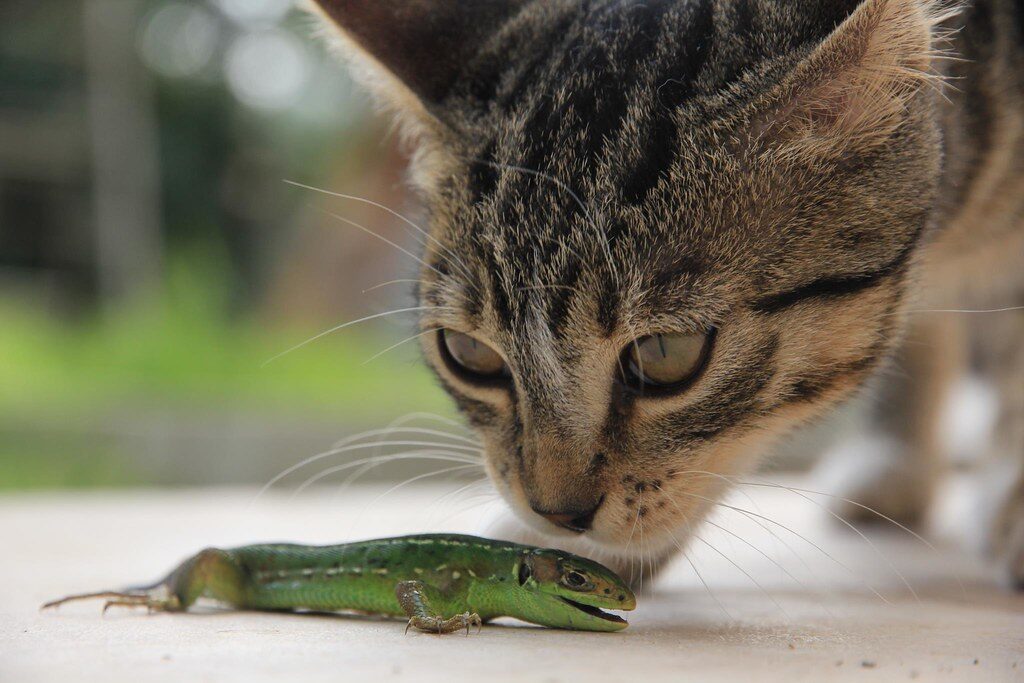
Cat Senses: The Definitive Visual Guide
The domestic cat is a supreme sensory machine. Just like humans, cats rely heavily on the five primary senses—vision, hearing, smell, taste, and touch—to constantly interpret and interact with their surrounding environment. These sensory organs continuously gather vital information from the outside world and send it, via a complex network of peripheral nerves, directly to the brain for lightning-fast interpretation. This comprehensive encyclopedia article explores the incredible biological adaptations of feline senses, tracing their evolution over millions of years to perfectly suit a nocturnal predatory lifestyle. Whether navigating in pitch darkness, detecting the ultrasonic squeaks of hidden rodents, or utilizing specialized facial whiskers to judge narrow spaces, a cat’s senses represent the pinnacle of evolutionary engineering.
1. Introduction to Feline Super Senses
Cats are globally renowned for possessing an array of “super senses” that far exceed human capabilities in many specific areas. Their large eyes are biologically engineered to see clearly in near-total darkness, while their highly mobile ears can swivel to pinpoint high-pitched noises completely inaudible to the human ear. Coupled with a profoundly powerful sense of smell and highly sensitive vibrissae (whiskers) that allow them to physically feel their way through unlit terrain, the domestic feline remains fundamentally equipped as a top-tier hunter. Every single sensory input is meticulously analyzed by the central nervous system, triggering immediate physiological responses that govern everything from their explosive righting reflex to the subtle twitch of a listening ear.
2. Evolutionary Adaptation of a Nocturnal Hunter
The highly specialized senses of the modern domestic cat are not an accident; they are the direct result of millions of years of evolutionary development perfectly suited to their pre-domesticated way of life. The ancestors of today’s house cats were solitary, nocturnal hunters whose survival depended entirely on their ability to detect and capture small, fast-moving prey under the cover of darkness. Because rodents—a main source of their wild diet—are primarily active at dusk and during the night, the feline sensory apparatus shifted dramatically toward maximizing light intake, detecting high-frequency rustling, and utilizing scent markers to navigate complex territories without relying solely on daylight vision.
3. Feline Vision: Designed for Dim Light
A cat’s eye is a remarkable hollow ball filled with a clear jelly called vitreous humor, designed specifically to let maximum light pass through to the sensitive retina. Within the retina, the photoreceptor cells are divided into rods (responsible for black-and-white vision in dim conditions) and cones (responsible for color vision). In a cat, the rods massively outnumber the cones by a ratio of 25 to 1, whereas in humans, that ratio is only 4 to 1. This incredible density of rod cells means that cats have vastly superior dim-light vision, though it comes at the expense of rich color perception. To protect these ultra-sensitive eyes from blinding glare during the daytime, a cat’s pupils will dramatically shrink into narrow, vertical slits.
4. Night Vision and the Tapetum Lucidum
In the pitch dark, a feline’s pupil can expand to an area three times larger than a fully dilated human pupil, deliberately allowing the tiniest glimmer of ambient light to enter the eye. However, the true secret to their legendary night vision is a specialized reflective layer located directly behind the retina, scientifically known as the tapetum lucidum. Any light entering the cat’s eye that is not immediately caught by the retina bounces off this mirror-like tapetum and travels back through the retina for a second chance at absorption. This evolutionary trick increases the eye’s overall sensitivity to light by up to 40 percent and creates the characteristic glowing golden or green “eyeshine” seen when a beam of light strikes a cat’s face at night.
5. Field of Vision and Binocular Depth Perception
Like many apex predators, cats possess forward-facing eyes that grant them an impressively wide field of view. Their total visual field spans approximately 200 degrees, which is significantly wider than a human’s. Crucially, there is a massive overlap of 140 degrees between the two eyes. This precise overlap provides the cat with powerful binocular vision, allowing the brain to calculate depth and judge striking distances with lethal accuracy. Interestingly, because their exceptionally large eyes require significant muscular effort to focus, cats are generally farsighted. They are unable to see objects clearly if they are within about 1 foot (30 cm) of their face, heavily relying on their whiskers for close-range detection instead.
6. Eye Colors and Shapes Across Breeds
The visual apparatus of the domestic cat also displays spectacular genetic diversity in terms of aesthetics. A cat’s eye color typically ranges across vibrant orange, striking green, and deep blue tones, depending on pigmentation genetics. Some cats, particularly those carrying the dominant white-spotting gene, possess odd-colored eyes—such as one brilliant blue eye and one green or copper eye. Beyond color, eye shape varies significantly across different breeds. While traditional Western breeds like the British Shorthair feature enormous, perfectly round owl-like eyes, Eastern breeds such as the Siamese and Oriental Shorthair display elegantly slanted, almond-shaped eyes that lend them a distinctively exotic expression.
7. The Mechanics of Feline Hearing
Feline hearing is an anatomical marvel designed to process complex acoustic data instantly. The external part of the ear, known as the pinna, acts like an incredibly efficient biological satellite dish. Sound is funneled into the ear canal, traveling rapidly across the eardrum and tiny ossicle bones to reach the spiral-shaped cochlea, where nerve impulses are triggered and fired directly into the brain. Remarkably, a cat’s ears are controlled by more than 20 individual muscles, allowing them to independently swivel the pinnae up to 180 degrees. This extreme mobility allows the cat to precisely pinpoint the exact height and location from which a subtle sound emanates.
8. Detecting High-Pitched and Ultrasonic Sounds
The acoustic range of a domestic cat is nothing short of phenomenal, vastly outperforming human auditory limits. While humans top out at hearing frequencies around 20,000 hertz, a cat’s hearing extends dramatically up to 65,000 hertz. This incredible ability reaches deep into the ultrasonic region, a full two octaves higher than humans can perceive. This specialized high-frequency detection is an evolutionary imperative; it specifically covers the acoustic range necessary to hear the ultrasonic squeaks of small rodents, the rustling of hidden enemies, and the subtle movements of prey scurrying under dense layers of grass or leaves.
9. The Inner Ear and the Righting Reflex
The inner ear of a cat serves a dual purpose: not only does it house the cochlea for hearing, but it also contains the highly complex vestibular apparatus. This organ is the cat’s biological center of balance. As the cat moves, the vestibular system constantly registers changes in bodily direction, orientation, and gravitational speed. It is this exact sensory organ that makes the feline “righting reflex” possible. If a cat falls from a height, the vestibular apparatus instantly alerts the brain of the cat’s orientation in space, allowing the muscular system to elegantly twist the body mid-air to ensure a safe, feet-first landing.
10. The Olfactory System: A Powerful Sense of Smell
While a feline’s sense of smell is not quite as overpowering as a tracking dog’s, it is vastly more acute and sensitive than that of a human. The olfactory membrane located inside a cat’s nasal passages—where odor molecules are physically trapped and analyzed—is approximately five times larger than the equivalent region in a human nose. Cats rely heavily on scent to interpret their complex social world. They use smell to recognize friends and enemies, track the faint trails of prey, and interpret territorial boundaries marked by the urine, feces, or sebaceous gland secretions of rival felines.
11. Taste Buds and Carnivorous Diet Preferences
In the feline world, the senses of smell and taste are inextricably linked; a cat will almost always meticulously smell its food to verify its edibility before taking the first bite. The surface of the cat’s tongue is covered in specialized hook-like papillae that hold thousands of taste buds. Because cats are obligate carnivores that require a strict meat-based diet to survive, their taste receptors have evolved to respond most strongly to bitter, acidic, and salty chemicals commonly found in animal tissues. While they can technically recognize sweet tastes, their biological lack of need for carbohydrates means they are generally indifferent to sugary substances.
12. The Vomeronasal Organ and Flehmen Response
Cats possess an extraordinary secondary olfactory system known as the vomeronasal organ, or Jacobson’s organ, which is located in the roof of their mouth behind the front teeth. This specialized sensory organ allows the cat to essentially “taste the air.” When a cat encounters a particularly strong, complex, or sexually significant scent (such as the pheromones left by another cat), it will draw the odor molecules into its mouth and press its tongue against the vomeronasal organ. This action produces a highly distinctive, open-mouthed grimace scientifically referred to as the “flehmen response,” making the cat look as though it is sneering or panting.
13. Tactile Sensitivity: The Hairless Sensors
A cat’s sense of touch is deeply refined and distributed strategically across its body. The entirely hairless parts of a feline’s anatomy—specifically the nose leather, the thick paw pads, and the rough tongue—are densely packed with highly sensitive nerve endings. These tactile sensors allow a cat to investigate the texture, temperature, and movement of objects or prey with incredible precision. The paws, in particular, are so sensitive that they can detect minute vibrations traveling through the floorboards, alerting the cat to approaching footsteps long before the sound reaches their ears.
14. Vibrissae: The Vital Role of Whiskers
Whiskers, scientifically known as vibrissae, are not just long hairs; they are profound sensory instruments. These deeply embedded, thickened hairs are rooted in specialized follicles surrounded by capsules of blood called sinuses. When a whisker merely brushes against an object or detects a shift in air currents, it sends instantaneous tactile information directly to the brain via sensory nerve endings. Prominently located on the sides of the nose, cheeks, above the eyes, and even on the backs of the forelegs, these mobile sensors help a cat “see” in pitch darkness and accurately judge the width of gaps through which their body is attempting to pass.
15. How Senses Work Together for Hunting
The true mastery of the feline nervous system is demonstrated when all these individual senses synchronize during a hunt. When a cat stalks its prey, the binocular vision locks onto the target, accurately calculating the lethal pouncing distance. Simultaneously, the swiveling pinnae track the ultrasonic sounds of the prey’s movement, while the sensitive paw pads navigate the ground silently to avoid snapping twigs. Finally, as the cat moves in for the strike—when the prey is too close for their farsighted eyes to focus—the vibrissae swing forward to form a tactile net, perfectly guiding the fatal bite. This seamless integration of sensory data makes the cat one of the most efficient predators on Earth.
Feline Senses Summary Table
| Sensory System | Biological Adaptations & Capabilities |
|---|---|
| Vision (Sight) | 200° field of view; 140° binocular overlap; tapetum lucidum enhances night vision; high rod-to-cone ratio for dim light. |
| Auditory (Hearing) | Hears up to 65,000 hertz (ultrasonic range); pinnae swivel up to 180°; inner ear controls righting reflex and balance. |
| Olfactory (Smell) | Sensory membrane is 5x larger than humans; uses the Jacobson’s (vomeronasal) organ to detect complex pheromones via flehmen response. |
| Gustatory (Taste) | Taste buds heavily favor bitter, acidic, and salty meat-based chemicals; indifferent to sweet or sugary tastes due to carnivorous diet. |
| Tactile (Touch) | Hairless pads and nose are highly sensitive; vibrissae (whiskers) detect air currents and objects to navigate in total darkness. |