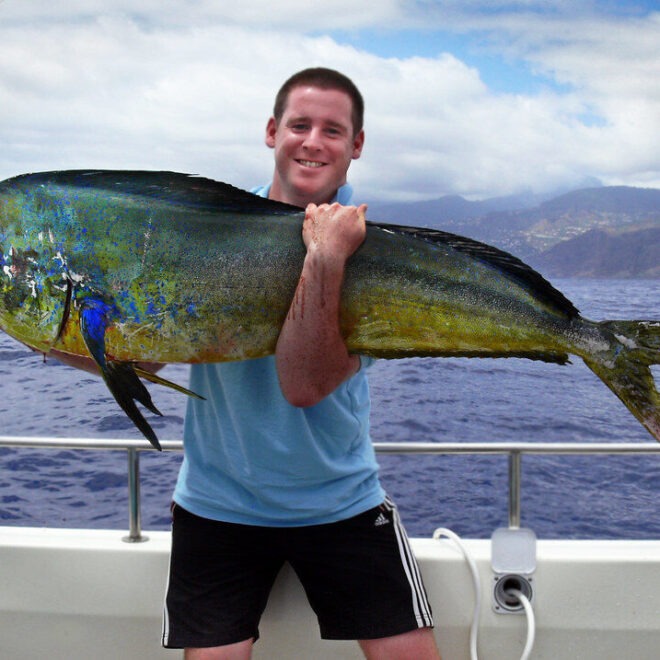
🌊 The Radiant Sprinter: A Comprehensive Encyclopedia of the Mahi-Mahi
An exhaustive 50-chapter documentation dissecting the biology, ecology, sport fishing prestige, and culinary versatility of Coryphaena hippurus.
✏️ Written & Curated by the Atechsur.org Marine Biology Team | Last Updated: March 28, 2026

The Mahi-Mahi (Coryphaena hippurus) is undeniably one of the most striking and energetically pursued fish in the global oceans. Brilliant in its neon coloration and renowned for its acrobatic leaps when hooked, this pelagic predator is a favorite among offshore anglers and seafood enthusiasts alike.
This encyclopedia provides an unprecedented 50-chapter deep dive into the world of the Mahi-Mahi. We will journey through its incredibly rapid lifecycle, dissect its specialized anatomy built for high-speed chases, track its relationship with floating sargassum, and explore how it became a staple on dinner plates from Hawaii to the Caribbean.
- Rapid Growth: Mahi-Mahi are among the fastest-growing fish in the ocean, capable of reaching 30 pounds within a single year.
- Short Lifespan: They live fast and die young, rarely exceeding 4 to 5 years of age in the wild.
- Color Shifters: Out of the water, they rapidly lose their vibrant iridescent colors, fading to a dull grey or yellow-green upon death.
- Not a Mammal: Despite the common name “Dolphinfish,” they are purely fish and have no relation to the mammalian dolphins (Delphinidae).
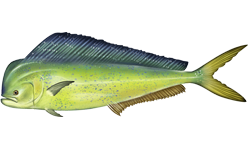
A sleek representation of the species highlighting its continuous dorsal fin.
The Mahi-Mahi has been recognized by seafaring cultures for millennia. In Western science, it was formally described by Carl Linnaeus in his foundational 1758 work, Systema Naturae.
He assigned it the binomial name Coryphaena hippurus. It is the type species for the genus Coryphaena, which contains only one other extant species: the Pompano Dolphinfish (Coryphaena equiselis).
The name Coryphaena is derived from the Greek word “koryphē,” meaning crown or peak, referring to the prominent, steep forehead of adult males. The specific epithet hippurus roughly translates to “horse tail,” likely referencing the deeply forked shape of its caudal fin.
The common name “Mahi-Mahi” comes from the Hawaiian language, meaning “very strong.” This name became heavily adopted in the commercial seafood industry starting in the 1980s to prevent consumers from confusing the fish with the mammalian dolphin.

A 1907 print from New York identifying the fish as “Dolphin or Dorado.”
In English-speaking regions, particularly the US East Coast and Caribbean, the fish is historically called the Dolphinfish. This likely stems from the fish’s habit of swimming ahead of sailing ships and leaping out of the water, a behavior similar to bottlenose dolphins.
In Spanish-speaking countries, especially in Central and South America, it is widely known as Dorado, meaning “golden,” a direct reference to its brilliant, flashing coloration when pulled from the water.

The body is deepest at the head and tapers sharply toward the tail.
The Mahi-Mahi possesses a highly distinctive, laterally compressed body that is deepest at the head and tapers sharply toward a slender caudal peduncle. This shape is optimized for sudden bursts of high speed near the ocean’s surface.
They lack a swim bladder entirely, which forces them to constantly swim to maintain their depth, but also allows them to rapidly change depth without suffering from barotrauma, a significant advantage when chasing elusive prey.
Mature males develop a nearly vertical, bony crest on their foreheads.

Females retain a smoothly rounded, sloping forehead throughout their lives.
Coryphaena hippurus is one of the most sexually dimorphic pelagic fishes. As males (often referred to by anglers as “bulls”) mature, they develop a prominent, bony crest on their foreheads, giving them a blunt, almost vertical facial profile.
Females (referred to as “cows”) maintain a more streamlined, sloping forehead. This physical difference becomes quite pronounced as the fish exceeds 15 pounds, allowing seasoned fishermen to easily identify the sex of the fish as it nears the boat.
A striking anatomical feature of the Mahi-Mahi is its single, continuous dorsal fin. This fin originates just behind the eyes and extends the entire length of the back, terminating just before the caudal fin.
This long fin consists of 55 to 65 soft rays (lacking stiff spines). When the fish is cruising, it can fold this fin down into a groove on its back to reduce drag. During rapid pursuit or displays of aggression, the fin is erected fully, giving the fish an impressive, sail-like appearance.
The anal fin mirrors the rear portion of the dorsal fin, starting roughly midway down the belly and extending to the tail. It is distinctly concave and helps stabilize the fish during high-speed turns.
The pelvic fins are relatively long and fit into a shallow depression on the belly when the fish swims at high speeds, further optimizing its hydrodynamic profile.
The caudal fin (tail) of the Mahi-Mahi is deeply forked and highly rigid. This structure is indicative of a fast, continuous swimmer in open oceanic waters.
The slender caudal peduncle minimizes water resistance while the wide, stiff tail blades provide maximum thrust. This allows the Mahi-Mahi to reach estimated burst speeds of up to 50 knots (92.6 km/h) when chasing agile prey like flying fish.

A specimen from Costa Rica showing the neon greens, blues, and golds typical of a live fish.
In the water, the Mahi-Mahi is arguably one of the most beautiful fish in the ocean. They exhibit dazzling, iridescent colors: golden-yellow flanks adorned with bright blue and green spots, and a dorsal area that shifts from deep oceanic blue to emerald green.
These colors are highly dynamic. The fish can “flash” or change hues rapidly depending on its mood, whether it is hunting, excited, or stressed. These color changes are mediated by specialized pigment cells called chromatophores.
The magnificent colors of the Mahi-Mahi are intrinsically linked to its nervous system and vitality. The moment the fish dies, the nervous control over the chromatophores is lost.
Within minutes of being removed from the water and expiring, the brilliant neon blues, greens, and golds fade rapidly into a muted, uniform silvery-grey or dull yellowish-green. This dramatic transformation is a well-known phenomenon among offshore anglers.

Specimens caught in the Mediterranean Sea off the coast of Tunisia.
Coryphaena hippurus is a highly migratory, circumglobal species. They inhabit tropical and subtropical waters in the Atlantic, Indian, and Pacific Oceans.
Their distribution is largely bounded by the 20°C (68°F) surface isotherm. They are incredibly abundant in areas like the Caribbean, the Gulf of Mexico, the Pacific coast of Central America, and around oceanic islands like Hawaii. They also migrate seasonally into temperate zones, such as the Mediterranean Sea, during warmer months.
Mahi-Mahi are epipelagic, meaning they spend the vast majority of their time in the upper layer of the open ocean, typically within the top 30 meters (100 feet) of the water column.
Unlike reef fish, they do not associate with the sea floor. Instead, they are constantly on the move in the “blue water,” following warm ocean currents and temperature breaks where baitfish congregate.
Perhaps the most defining aspect of Mahi-Mahi ecology is their affinity for floating objects. In the wild, they are strongly associated with massive floating mats of Sargassum weed.
These weed lines form drifting ecosystems in the open ocean. The Sargassum provides crucial shelter for juvenile Mahi-Mahi hiding from larger predators, while also attracting a smorgasbord of baitfish, small crabs, and shrimp that adult Mahi-Mahi feast upon.
Beyond natural Sargassum, Mahi-Mahi will congregate under almost any floating debris (flotsam), including logs, pallets, or discarded fishing gear. The shade provides a tactical advantage for ambushing prey.
Fishermen globally exploit this behavior by deploying artificial Fish Aggregating Devices (FADs)—anchored or drifting buoys with submerged structures designed specifically to attract pelagic species like Mahi-Mahi and tuna for easier harvesting.
Mahi-Mahi are voracious, opportunistic carnivores. Their absolute favorite prey is the flying fish (Exocoetidae). They will actively pursue flying fish at high speeds, sometimes tracking them from below as they glide through the air, timing their strike perfectly for when the fish lands.
Their diet is supplemented with squid, small pelagic crabs, halfbeaks, and the juveniles of other pelagic species, including their own kind. Their high metabolic rate requires them to feed constantly.

A drawing of a “Dolfijnvis” from the journal of the Dutch ship Gelderland during its voyage to Asia (1601-1603).
Because they frequently shadowed sailing vessels traversing tropical oceans, Mahi-Mahi were frequently documented by early explorers. The illustration above from the journal of the Dutch ship Gelderland highlights how striking the fish appeared to 17th-century sailors.
These early seafarers often relied on catching Mahi-Mahi to supplement their meager rations with fresh protein during long, arduous oceanic crossings.
The biological most astonishing fact about the Mahi-Mahi is its growth rate. They are considered one of the fastest-growing teleost fish in the world. In optimal conditions, a newly hatched larvae can reach a weight of 3 to 4 pounds in just six months.
Within a single year, a Mahi-Mahi can easily exceed 20 to 30 pounds. This hyper-accelerated growth requires massive amounts of food intake, driving their aggressive, constant hunting behavior.
The trade-off for their explosive growth is an incredibly short lifespan. Mahi-Mahi “live fast and die young.” The maximum estimated lifespan in the wild is only 4 to 5 years.
The vast majority of the population consists of fish under 2 years old. They face intense predation from larger apex predators such as marlin, sailfish, large tuna, and various pelagic shark species.
To sustain their populations despite short lifespans, Mahi-Mahi are prolific breeders. They reach sexual maturity incredibly early, often within 4 to 5 months of hatching, at a length of roughly 8 inches (20 cm).
Spawning occurs year-round in tropical waters, typically far offshore. A single large female can release between 100,000 and 1,000,000 eggs in a single spawning event. They are batch spawners, meaning they can spawn multiple times within a season.
The fertilized eggs are pelagic and buoyant, floating in the warm surface currents. They hatch very rapidly, often within 48 to 72 hours, depending on the water temperature.
The newly hatched larvae are minuscule, measuring only a few millimeters. They are immediately predatory, feeding on tiny zooplankton. As they grow, they quickly associate with floating Sargassum weed, which provides critical shelter during their most vulnerable stage.
Juvenile and young adult Mahi-Mahi are highly social, forming large schools that can consist of hundreds of individuals. This schooling behavior offers protection from predators and allows for coordinated hunting of bait schools.
As the fish age and grow larger (particularly the bull males), they tend to become more solitary or travel in small pairs or trios, aggressively patrolling weed lines rather than remaining in large, competitive packs.
Because Mahi-Mahi naturally congregate under floating objects, they are acutely vulnerable to oceanic plastic pollution. What they perceive as a natural raft of Sargassum weed may actually be a mass of drifting plastic debris and discarded fishing nets.
Juveniles can become entangled in ghost nets, and adults may inadvertently consume small pieces of plastic while rushing to attack baitfish hiding among the debris, leading to intestinal blockages or toxic accumulation.

A classic “bull” Mahi caught off the coast of Hatteras, North Carolina.
The Mahi-Mahi is one of the most highly prized gamefish in the world. Offshore anglers target them enthusiastically because they are relatively abundant, aggressive biters, and put up a spectacular fight.
When hooked, they are famous for “tail-walking”—leaping repeatedly out of the water and shaking their heads violently in an attempt to dislodge the hook. Their speed and stamina provide an exhilarating challenge for light-tackle fishermen.
Due to its high demand as premium seafood, the Mahi-Mahi supports a massive global commercial fishery. They are primarily caught using pelagic longlines, purse seines, and trolling methods.
Countries bordering the Pacific Ocean, such as Peru, Ecuador, and Taiwan, account for a large portion of the global catch. Despite heavy fishing pressure, their rapid growth and prolific spawning rates have historically prevented population collapses seen in other pelagic species like Bluefin Tuna.

The raw flesh is firm, ranging from light pink to slightly whitish, characterized by its lean texture.
Mahi-Mahi is exceptionally popular in global seafood cuisine. The flesh is lean, moderately firm, and yields large, moist flakes when cooked. It has a slightly sweet, mild flavor that is stronger than flounder but much milder than swordfish.
Because it is a lean fish, it holds up excellently to aggressive cooking methods. It is commonly grilled, broiled, or pan-seared, and is thick enough to hold together well without disintegrating.

Mahi-Mahi is widely considered the premium standard for high-quality fish tacos.

The firm flesh handles marinades, grilling, and bold sauces perfectly.
One of the most iconic culinary applications for this fish is the Fish Taco, particularly popular in California, Mexico, and Hawaii. The firm, mild meat provides the perfect canvas for bright, acidic salsas, crisp cabbage, and creamy sauces.
Whether blackened, grilled, or beer-battered, Mahi-Mahi stands up to bold flavors without being overpowered, cementing its status as a staple in coastal and fusion dining.

Grilled Mahi-Mahi topped with a bright mango-pineapple salsa.

Roasted Mahi-Mahi heavily seasoned with Cajun spices.
Beyond casual dining, Mahi-Mahi frequently graces fine-dining menus. Because of its tropical origins, chefs frequently pair it with bright, fruity, or acidic components. Fruit salsas (mango, pineapple, or papaya), citrus-butter sauces, and macadamia nut crusts are classic preparations.
It also handles robust, spicy applications exceptionally well, such as heavy Cajun blackening spices, as the thick fillet will not dry out easily if cooked with care.
Given its incredibly rapid growth rate and high market demand, the Mahi-Mahi has long been a target for commercial Aquaculture.
However, farming them presents significant challenges. They are hyper-active open-water swimmers; confining them in pens often leads to injuries as they crash into the netting. Furthermore, their voracious appetite requires massive amounts of high-protein feed, making commercial scaling expensive. Research continues into specialized offshore cage designs to make Mahi aquaculture viable.

The FDA maintains a Reference Standard Sequence Library for Seafood Identification to combat seafood fraud.
Because Mahi-Mahi is a premium seafood product, it is sometimes the subject of “seafood fraud,” where cheaper white fish are mislabeled and sold under its name.
To combat this, the US Food and Drug Administration (FDA) maintains a strict reference standard library, utilizing DNA barcoding and standardized photographic records of genuine Coryphaena hippurus specimens to enforce market authenticity.
Currently, the IUCN Red List classifies the Mahi-Mahi as Least Concern. Their incredibly high fecundity (egg production), rapid maturation, and vast global distribution act as a buffer against heavy commercial exploitation.
While local populations can experience seasonal depletion, the species as a whole is currently stable. However, responsible fisheries management, including enforcing minimum catch sizes and regulating FAD deployment, is necessary to ensure long-term sustainability.
When hooked by an angler, Mahi-Mahi exhibit a desperate, chaotic escape maneuver. If they cannot shake the hook by jumping, they will often dive rapidly and then suddenly reverse direction, swimming full speed straight toward the boat (a “bailout”). This slackens the fishing line, often resulting in the fish throwing the hook and escaping.
The only other member of the family is the Pompano Dolphinfish (Coryphaena equiselis). It is often mistaken for a juvenile Mahi-Mahi. However, the Pompano dolphinfish remains much smaller (rarely exceeding 30 inches), has a deeper body profile, and features a distinct square tooth patch on its tongue, which C. hippurus lacks.
Despite being apex-level predators themselves, adult Mahi-Mahi are a crucial food source for the true giants of the open ocean. Blue Marlin and Black Marlin actively hunt adult Mahi, using their bills to slash and stun the fast-swimming fish before consuming them.
Like tuna and mackerel, Mahi-Mahi flesh contains high levels of the amino acid histidine. If the fish is not immediately chilled on ice after being caught, bacteria will convert the histidine into histamine.
Consuming improperly stored Mahi-Mahi can cause Scombroid food poisoning, characterized by an allergic-type reaction (flushing, sweating, headache). Proper icing is absolutely critical in commercial and recreational harvests.
Because of their schooling nature, anglers use a specific tactic: when a Mahi-Mahi is hooked, they will keep it in the water near the boat rather than immediately landing it. The bright, flashing colors and distress signals of the hooked fish will attract the rest of the school, allowing the crew to cast fresh bait to the frenzied followers.
As pelagic cruisers, Mahi-Mahi often pick up oceanic hitchhikers. Pennella copepods (a type of parasitic crustacean) frequently embed themselves in the flesh near the dorsal fin, appearing like small black strings trailing from the fish. Remoras (suckerfish) will also attach themselves to large bulls to scavenge scraps from their meals.
Mahi-Mahi are primarily visual hunters, possessing excellent eyesight adapted to the bright surface waters. They are highly attracted to contrasting colors and erratic movement, which is why bright pink, green, and silver trolling skirts (artificial lures) are highly effective at provoking strikes.
Periodic climatic events like El Niño drastically alter ocean temperatures and current flows. These events can push the warm 20°C isotherm much further north or south than usual, causing temporary massive influxes of Mahi-Mahi into areas where they are normally rare, such as the coasts of Southern California or northern Peru.
In the open ocean, fishermen rely on seabirds to locate Mahi-Mahi. Magnificent Frigatebirds will fly high above the water, tracking the chaotic movements of a Mahi school driving flying fish to the surface. Spotting a diving frigatebird is a near-guarantee of finding hungry Mahi below.
Unlike sharks, Mahi-Mahi do not have cutting teeth. Their jaws are lined with bands of fine, raspy, inward-pointing teeth. This design is not for chewing; it acts like heavy-duty velcro to snatch and securely grip slippery prey like squid or flying fish, ensuring it is swallowed whole.
In traditional Polynesian culture, the Mahi-Mahi was a highly respected catch, signifying the prowess of the offshore fisherman. Its Hawaiian name, implying “strong,” reflects the deep respect indigenous seafarers had for its fighting ability and vital role as sustenance.
Organizations like Seafood Watch generally rate troll-caught or pole-and-line caught Mahi-Mahi as a “Best Choice” or “Good Alternative” for consumers. These fishing methods have very low bycatch rates compared to indiscriminate pelagic longlining.
On calm, windless days, adult Mahi-Mahi are sometimes observed “logging”—floating perfectly still just inches below the surface, resembling a drifting piece of wood. It is believed this behavior allows them to rest in the sun-warmed surface layer while keeping a visual watch for flying fish below.
The International Game Fish Association (IGFA) all-tackle world record for Mahi-Mahi is an astoundingly massive 87-pound (39.46 kg) bull caught off the coast of Papagallo, Costa Rica, in 1976. This remains the gold standard for offshore anglers.
In the harsh environment of the open ocean, calories cannot be wasted. Stomach content analyses reveal that adult Mahi-Mahi are frequently cannibalistic, readily consuming smaller, juvenile Mahi that inhabit the same Sargassum mats if other baitfish are scarce.
On the Eastern coast of North America, the Gulf Stream current is the lifeblood of the Mahi population. This massive river of warm water transports Sargassum weed, bait, and millions of Mahi-Mahi northward from the Caribbean, driving the summer sport fishing economies of states like Florida and the Carolinas.
When filleted, the meat of a Mahi-Mahi can vary in color from a pale, translucent white to a distinct pinkish hue. This color variation is generally tied to their immediate diet (a diet high in crustaceans can impart a pinker hue) and the thickness of the “bloodline,” a dark, iron-rich strip of muscle used for sustained swimming that must be removed before cooking.
Mahi-Mahi are predominantly diurnal (daytime) sight hunters. At night, they become lethargic and suspend themselves in the water column or tuck close to floating debris to avoid nocturnal predators like large oceanic sharks and swordfish.
The future of the Mahi-Mahi relies on international cooperation. Because they are highly migratory, navigating through the Exclusive Economic Zones (EEZs) of dozens of countries, regional catch limits are often ineffective. Organizations like the ICCAT monitor pelagic stocks to prevent the unchecked expansion of high-seas longlining.
Is Mahi-Mahi a dolphin?
No. Despite the confusing historical common name “Dolphinfish,” the Mahi-Mahi is 100% fish (a teleost). It is not a mammal and is completely unrelated to actual dolphins like the Bottlenose Dolphin.
Why does the fish change color when caught?
The brilliant neon colors are controlled by the fish’s nervous system. Once the fish is removed from the water and expires, the nervous system ceases to function, causing the chromatophores (pigment cells) to relax and the vibrant colors to fade rapidly to a dull grey or yellow.
Is Mahi-Mahi safe to eat?
Yes, it is highly prized in culinary circles for its firm, mild white flesh. However, because it contains high levels of histidine, the fish must be immediately chilled on ice after being caught to prevent the buildup of histamine, which can cause Scombroid food poisoning.
Explore our trusted network of partner websites covering directories, encyclopedias, marketplaces, education, and finance.
- This digital documentation is created solely as a basic reference material for marine biology education and the observation of pelagic wildlife.
- All included image multimedia content is distributed from the free open-license directory (GNU/Creative Commons) belonging to the worldwide Wikimedia Commons database.
- The conservation status ranking of this species refers to the verified assessments by the IUCN Red List.
About the Drafting Team: Atechsur.org Biology Experts
The scientific biology editorial board of Atechsur.org proactively provides accurate, in-depth scientific reports with a dedication to engaging, humanistic language to promote a future of improved marine conservation and sustainable ocean ecosystems globally.
© 2026 – Atechsur.org – Complete Mahi-Mahi Encyclopedia Database (Chapters 1 – 50)
Coryphaena hippurus • Least Concern • Updated: March 28, 2026