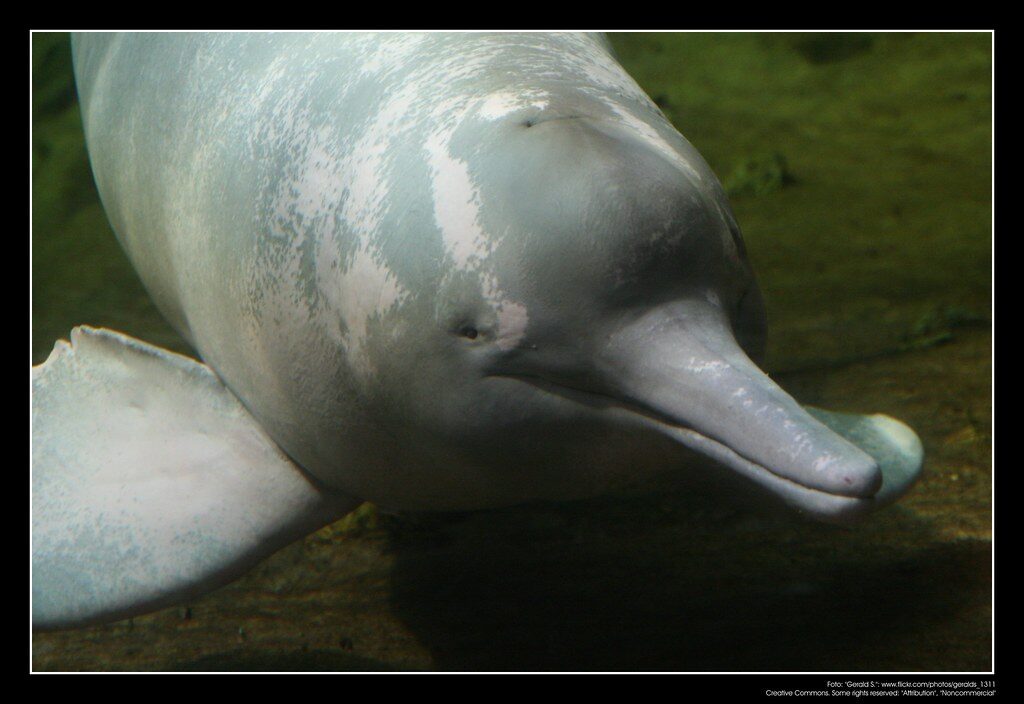
🐬 The Pink Phantom: Encyclopedia of the Amazon River Dolphin
An exhaustive 50-chapter documentation dissecting the biology, advanced echolocation, evolutionary history, and profound cultural significance of Inia geoffrensis.
✏️ Written & Curated by the Atechsur.org Marine Biology Team | Last Updated: March 31, 2026

The Amazon River Dolphin (Inia geoffrensis), commonly referred to as the Boto or the Pink River Dolphin, is arguably the most recognizable and biologically fascinating inhabitant of the vast Amazonian water system. As the largest species of river dolphin in the world, it is a master of navigating the complex, flooded forests of South America.
This encyclopedia provides an unprecedented 50-chapter deep dive into the world of the Boto. We will explore its bizarre skeletal adaptations, its mastery of echolocation in zero-visibility waters, the mystery behind its pink coloration, its place in indigenous mythology, and the severe anthropogenic threats pushing it toward extinction.
- Unfused Neck: Unlike oceanic dolphins, the Boto has unfused cervical vertebrae, allowing it to turn its head 90 degrees to navigate tangled tree roots.
- The Pink Hue: They are born gray; the famous pink color develops in adulthood and is believed to be heavily influenced by scar tissue from aggressive intraspecific fighting.
- Sensory Hairs: They possess stiff, sensory hairs (vibrissae) on their snouts, helping them detect prey buried in the river mud.
- Brain Size: Their brain capacity is 40% larger than humans (relative to body size), indicating incredibly high intelligence and complex acoustic processing.
 1. Discovery and Scientific Naming
The Amazon River Dolphin was first officially described by the French zoologist Henri Marie Ducrotay de Blainville in 1817. He initially placed it in the genus Delphinus (the common dolphins).
However, it was soon realized that this freshwater mammal was anatomically distinct from oceanic dolphins. It was moved to its own genus, Inia. The specific name, geoffrensis, honors the renowned French naturalist Étienne Geoffroy Saint-Hilaire, who secured the first specimen for scientific study in Europe.
 2. Sympatric Species: The Tucuxi (Sotalia fluviatilis)

Often confused with the Boto, the Tucuxi is smaller, grey, and jumps frequently. It is an oceanic dolphin that adapted to fresh water.
The Boto is not the only dolphin in the Amazon. It shares its waters with the Tucuxi (Sotalia fluviatilis). However, they are not closely related. The Tucuxi belongs to the family Delphinidae (oceanic dolphins).
While the Tucuxi is smaller, entirely grey, and highly acrobatic (often seen leaping out of the water in large pods), the Boto is larger, solitary, rarely jumps completely clear of the water, and belongs to the ancient family Iniidae.
 3. General Morphology and Size

The Boto is the largest of all river dolphin species.
The Amazon River Dolphin is the largest of the five extant river dolphin species. It exhibits significant sexual dimorphism, which is highly unusual for river dolphins. Males can be up to 16% longer and 55% heavier than females.
A fully grown adult male can reach lengths of 2.5 meters (8.2 feet) and weigh up to 185 kilograms (400 lbs). Their bodies are robust and flexible, lacking the streamlined, rigid torpedo shape of fast-swimming oceanic dolphins.
 4. Skeletal Adaptations: The Skull

An 1847 illustration showing the elongated rostrum and the pronounced cranial asymmetry.
The skull of the Boto is a marvel of evolutionary specialization. The rostrum (snout) is incredibly long and narrow, perfect for snapping at small fish darting through submerged branches.
Like many toothed whales (Odontoceti), the skull is noticeably asymmetrical. This asymmetry is directly linked to the housing of the complex melon organ and the nasal passages responsible for generating their high-frequency echolocation clicks.
 5. Dentition: Heterodont Teeth

Skull replica at the MUSE. Notice the conical front teeth and the flatter rear teeth.
Unlike most oceanic dolphins which have homodont dentition (all teeth are identical pegs), the Boto has heterodont dentition—different types of teeth for different functions.
The front teeth are sharp and conical, designed for grasping slippery, fast-moving fish. The teeth at the rear of the jaw are flatter and more robust, functioning almost like molars. These rear teeth allow the dolphin to crush the hard shells of crabs and small river turtles before swallowing.
 6. The Unfused Cervical Vertebrae
Perhaps the most critical anatomical adaptation of the Boto is its neck. In almost all marine cetaceans, the seven cervical (neck) vertebrae are fused together to provide a rigid, streamlined shape for high-speed ocean swimming.
In the Boto, these seven vertebrae remain completely unfused. This grants the dolphin incredible flexibility, allowing it to turn its head 90 degrees left, right, or downward. This agility is absolutely essential when weaving through the maze-like roots and submerged trunks of the flooded Amazon forest.
 7. Fin Structure and Agility

A Boto surfacing in Maynas, Loreto, Peru. They lack a prominent dorsal fin.
The pectoral fins (flippers) of the Amazon River Dolphin are exceptionally large, broad, and paddle-shaped. Because they have highly mobile shoulder joints, they can row these flippers in circular motions, allowing them to swim backwards or pivot on the spot.
They completely lack a true dorsal fin. Instead, they have a low, elongated triangular ridge running down their back. A tall dorsal fin would constantly snag on vines and branches in the shallow, flooded forest; the low ridge allows them to slide under obstacles effortlessly.
 8. The Mystery of the Pink Coloration
The Boto is famously known as the Pink River Dolphin, but they are not born this way. Calves and juveniles are a solid dark grey. As they age, they slowly lose this pigmentation, revealing the pinkish hue underneath.
The intensity of the pink color varies. Males are generally much pinker than females. While genetics and capillary blood flow near the skin play a part, biologists widely believe the pink coloration is heavily influenced by scar tissue. Botos, especially males, are highly aggressive toward one another, and a lifetime of bites and scrapes replaces the grey skin with pink scar tissue.
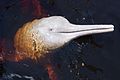 9. Thermoregulation and “Blushing”

When excited or overheated, increased blood flow to the skin makes them appear even brighter pink.
The pink color can actually change dynamically. Because the water of the Amazon can be very warm, the Boto has a dense network of blood vessels just below the surface of its skin to release excess body heat into the water.
When a dolphin is highly active, excited, or stressed, blood flow to these capillaries increases dramatically. This causes the dolphin to literally “blush,” turning a bright, flushed pink, similar to humans blushing after exertion.
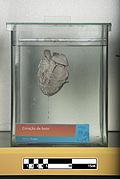 10. Cardiovascular System

Formalin fixation on display at the Museum of Veterinary Anatomy FMVZ USP.
Like all cetaceans, the cardiovascular system of the Boto is highly adapted for diving. They possess a high concentration of myoglobin in their muscles, allowing them to store large amounts of oxygen directly in the tissue.
While they are capable of holding their breath for several minutes, the shallow nature of their riverine habitat means they typically surface to breathe every 30 to 40 seconds. Their heart, as seen in the preserved specimen, is powerful enough to maintain critical blood flow to the brain even during extended, stressful dives under submerged root systems.
 11. Respiration and the Blowhole

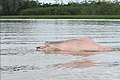
A pink dolphin blowing water as it exhales in Loreto, Peru.
The Boto breathes through a single blowhole located at the top of its head, slightly offset to the left due to the cranial asymmetry required for echolocation.
When surfacing, they exhale explosively, sometimes creating a small, bushy spout of mist if water rests over the blowhole. The exhalation and inhalation process takes only a fraction of a second before the muscular flap seals the blowhole water-tight as the dolphin slips back beneath the surface.
 12. Geographic Range

The Boto is widespread throughout the Amazon and Orinoco basins.
The Amazon River Dolphin boasts an incredibly expansive geographic range covering approximately 7 million square kilometers. They are endemic to the vast freshwater systems of South America.
Their range includes the entire Amazon River basin and the Orinoco River basin, stretching across Brazil, Peru, Colombia, Ecuador, Bolivia, and Venezuela. They inhabit main river channels, smaller tributaries, oxbow lakes, and deeply flooded forests.
 13. Taxonomy and Subspecies
Currently, the scientific community generally recognizes two or three subspecies of Inia geoffrensis, separated by impassable geographic barriers like massive rapids or waterfalls.
- Inia geoffrensis geoffrensis: The nominate subspecies, found throughout most of the Amazon basin.
- Inia geoffrensis humboldtiana: Restricted primarily to the Orinoco River basin.
- Inia geoffrensis boliviensis (The Bolivian river dolphin): Separated from the main Amazon population by the Teotônio rapids on the Madeira River. Some scientists argue this is genetically distinct enough to be a separate species entirely.
 14. The Amazon River Ecosystem

The river’s massive discharge supports the complex habitat required by the Boto.
The survival of the Boto is intrinsically linked to the health of the Amazon River. This massive water system is characterized by three distinct water types: white water (muddy and nutrient-rich from the Andes), black water (acidic and tannin-stained from decaying leaves), and clear water.
Botos navigate seamlessly between these different water types, adjusting their hunting strategies depending on the visibility and the specific fish species that inhabit each zone.
 15. The Estuary and the Amazon Plume

Copernicus Sentinel-3 image showing the river meeting the Atlantic Ocean.
While the Boto is strictly a freshwater species, its range extends all the way down to the massive river delta near the Atlantic Ocean. They can tolerate the slightly brackish water of the estuary.
However, they generally avoid the main channels of the lower river mouth during the dry season, as the intense tidal bores (the Pororoca) make the water highly turbulent and difficult to navigate, preferring to remain in the calmer, protected side channels.
 16. The Flooded Forest (Várzea and Igapó)
The true magic of the Boto’s habitat is the annual flood pulse. During the wet season, the Amazon rises by up to 30 feet (9 meters), inundating thousands of square miles of surrounding rainforest. This creates the Várzea (white water flooded forest) and Igapó (black water flooded forest).
During this time, the Botos leave the main river channels entirely and swim directly into the submerged forest. They weave between tree trunks, hunting fish that are feeding on fruits falling from the canopy above.
 17. Sensory Systems: Vision in the Murk
Contrary to popular belief, the Amazon River Dolphin is not blind (unlike the Ganges River Dolphin). Their eyes are small, but fully functional.
Their vision is highly adapted to the dark, murky waters. While they cannot see fine details over long distances, they have excellent contrast sensitivity, allowing them to spot the silhouette of a fish against the light filtering down from the surface.
 18. Advanced Echolocation (Biosonar)

The bulbous forehead contains the melon, an organ made of acoustic fat that focuses and directs echolocation clicks.
In water where visibility is often less than a few inches, the Boto relies primarily on highly sophisticated echolocation. It produces rapid, high-frequency clicks by forcing air through phonic lips located just below the blowhole.
These sound waves are focused into a directional beam by the “melon”—the bulbous, fatty organ on their forehead. Uniquely, the Boto can actually alter the shape of its melon using surrounding muscles, allowing it to act like an adjustable acoustic lens, changing the beam of sound to sweep broadly or focus tightly on a specific target.
 19. Receiving the Echo
When the echolocation clicks bounce off a fish, a tree root, or a rock, the returning sound waves are not picked up by external ears (which would create drag).
Instead, the returning echoes are received primarily by the Boto’s hollow lower jawbone, which contains a specialized fatty channel. This channel conducts the sound waves directly to the inner ear and the brain. The brain processes these echoes in real-time, giving the dolphin a perfect, high-resolution 3D “acoustic map” of its surroundings.
 20. Tactile Senses: Vibrissae
Oceanic dolphins lose all their facial hair shortly after birth. The Boto, however, retains stiff, bristle-like sensory hairs (vibrissae) along its upper and lower jawline throughout its entire life.
These hairs act exactly like a cat’s whiskers. Because the Boto often hunts by rooting its long snout deep into the mud of the riverbed to flush out hiding crabs or bottom-dwelling fish, these sensitive hairs allow it to feel its prey physically before snapping its jaws shut.
 21. An Unrivaled Diet
The Amazon River Dolphin has the most diverse diet of any toothed whale. They are known to consume over 50 different species of fish. Their diet fluctuates drastically depending on the season and the flood cycle.
They prey on everything from small, schooling tetras to heavily armored catfish, and famously, the notoriously vicious red-bellied piranhas. Their heterodont teeth and powerful jaws allow them to exploit almost every nutritional niche the river provides.
22. Social Structure: The Solitary Hunter
Unlike oceanic dolphins that form highly organized pods of hundreds of individuals, the Boto is primarily a solitary creature. You will rarely see more than two or three together, usually a mother and her calf.
This solitary nature is likely an adaptation to their environment. In the dense, tangled flooded forest, large groups would be cumbersome, and the complex acoustic environment would make pod communication chaotic. They hunt alone, relying entirely on their own echolocation.
 23. Mating and Aggression
During the mating season, the solitary nature of the Boto breaks down. Males will aggressively compete for access to females. The intense scarification and resulting bright pink coloration on adult males are direct evidence of this brutal intraspecific combat.
Males will violently bite and ram each other, using their conical teeth to inflict deep raking wounds. The largest, pinkest, and most scarred males are typically the most successful breeders.
 24. Object Play and Tool Use?

A male Boto displaying behavior of carrying mud or sticks, believed to be a socio-sexual display to attract females.
Botos are incredibly intelligent and have been observed exhibiting complex behaviors that border on tool use. Adult males are frequently seen carrying objects—such as branches, clumps of mud, or aquatic vegetation—in their beaks.
They thrash these objects on the water’s surface. Scientists hypothesize this is not play, but rather a “socio-sexual display.” Males with objects are more likely to be aggressive and successful, signaling their strength and fitness to observing females.
 25. Reproduction and Calving
Gestation for the Amazon River Dolphin is lengthy, lasting approximately 11 to 13 months. Births generally coincide with the receding water levels (May to July). This timing is strategic; as water drains from the flooded forest, fish are forced into smaller, concentrated pools, making it incredibly easy for the nursing mother to hunt.
The female gives birth to a single calf, which is born tail-first. The calf is highly dependent on the mother and will nurse for over a year, staying close to her side to learn the complex echolocation and hunting skills required for survival.
 26. The Encantado: Amazonian Folklore
The Boto holds a profound, almost mystical place in Amazonian folklore. They are widely believed to be “Encantados” (enchanted beings or shapeshifters).
According to legend, during the night, the pink dolphin transforms into a handsome, impeccably dressed young man. He attends local village festivals, wearing a white hat to conceal his blowhole. He seduces young women, impregnating them before returning to the river before dawn to transform back into a dolphin. For centuries, this myth provided a protective taboo that prevented locals from hunting or harming the Boto.
 27. Natural Predators
As the apex aquatic predator in its environment, the adult Amazon River Dolphin has virtually no natural predators. However, calves and sick individuals face severe threats.
The massive Black Caiman (Melanosuchus niger), the Green Anaconda, and the Jaguar will eagerly prey on a vulnerable Boto if caught unaware in the shallow margins of the flooded forest.
 28. Conservation Status: Endangered

The species was officially uplisted to Endangered by the IUCN in 2018.
Historically, the Boto was protected by the powerful indigenous myths surrounding the Encantado. Sadly, as modern culture replaces traditional beliefs, this protective taboo is fading rapidly.
In 2018, the IUCN officially evaluated the species and listed it as Endangered, noting a rapid and severe decline in population numbers across its entire range due entirely to human activities.
 29. The Primary Threat: Bait for Piracatinga
The single greatest threat currently causing the population crash of the Boto is the commercial fishing industry, specifically the hunt for a scavenging catfish called the Piracatinga (or Mota).
This catfish is highly valuable on the Colombian and Brazilian markets. Because the Piracatinga is a scavenger, fishermen discovered that the fatty, bloody meat of a butchered dolphin makes the absolute best bait. Fishermen are actively harpooning thousands of Botos every year simply to chop them up as bait to catch catfish.
 30. The Hope of Ecotourism

A group of Botos swimming near tourists in the Anavilhanas National Park, Brazil.
One of the most effective strategies to combat the slaughter of Botos for bait is the rise of sustainable ecotourism. In areas like the Anavilhanas National Park, locals are employed to guide tourists to see and occasionally interact safely with wild Botos.
When a living dolphin brings in continuous tourism revenue year after year, it becomes exponentially more valuable to the local community alive than it does chopped up as bait for a single catfish haul, providing a powerful economic incentive for protection.
Like many marine mammals, Botos frequently drown after becoming accidentally entangled in large, invisible monofilament gillnets set by commercial fishermen.
Dams physically fragment the river, preventing dolphin populations from mixing, leading to genetic isolation and the destruction of the natural flood pulse.
Illegal gold miners dump mercury into the rivers. Because the Boto is an apex predator, the mercury bioaccumulates in their fat, causing severe neurological damage and reproductive failure.
Severe, unprecedented droughts driven by climate change are drying up the oxbow lakes, trapping and killing hundreds of dolphins in shallow, overheated pools.
Increased motorized boat traffic in the Amazon leads to fatal propeller strikes and creates acoustic pollution that blinds the dolphin’s echolocation.
Historically, Botos were captured for aquariums (like Apure in the Duisburg Zoo), but they fare exceptionally poorly in captivity and suffer high mortality rates.
The I. g. boliviensis subspecies has more teeth and a smaller skull, adapting to the clearer, rockier rivers above the Madeira rapids.
In the wild, Botos are believed to live for over 30 years, aging similarly to oceanic dolphins, though precise aging without analyzing tooth layers is difficult.
Beyond echolocation clicks, they use a variety of whistles and burst-pulses to communicate emotional states and maintain contact with calves.
In some traditional areas, fishermen actually use the Botos to help herd fish into their nets, a rare example of human-cetacean cooperative hunting.
The extinction of the Baiji (Chinese River Dolphin) in 2006 serves as a grim warning of what will happen to the Boto if river industrialization is not halted.
Clear-cutting the rainforest leads to massive soil erosion, altering the delicate chemical balance and flow dynamics of the river systems they rely on.
Protected areas like the Macarena in Colombia provide vital, undisturbed nursery grounds for pregnant females to raise their calves safely.
The Iniidae family split from oceanic dolphins roughly 15 million years ago, entering the continent when South America was partially covered by a shallow inland sea.
Like all cetaceans, Botos exhibit unihemispheric slow-wave sleep, meaning they shut down only one half of their brain at a time so they can continue to breathe and swim.
While they eat piranhas, a sick or injured dolphin can easily fall victim to a large school of them, utilizing the flooded forest to hide when wounded.
They are incredibly hardy, able to transition seamlessly between highly acidic blackwater and sediment-choked whitewater without physiological stress.
Their robust rear teeth are specifically evolved to crush the thick, bony plates of the plecostomus and other armored catfish species abundant in the Amazon.
International trade of the species or its parts is strictly regulated, though the primary threat remains local, illegal hunting for bait.
Why is the dolphin pink?
They are born gray. The pink coloration develops as they age and is largely attributed to scar tissue from fighting and a dense network of blood vessels near the skin used for thermoregulation.
Are they blind?
No, their eyes are small but functional, highly adapted to seeing contrast in murky, low-light water, though they rely primarily on echolocation to hunt.
Why are they endangered?
The primary driver of their rapid population decline is the illegal hunting of the dolphins to be chopped up and used as bait in the commercial Piracatinga catfish industry.
Explore our trusted network of partner websites covering directories, encyclopedias, marketplaces, education, and finance.
- This digital encyclopedia is created solely as an educational reference material detailing the ecological behaviors and biology of the Inia geoffrensis.
- All included image multimedia content is distributed from the free open-license directory (GNU/Creative Commons Attribution) belonging to the worldwide Wikimedia Commons database.
- Ecological statistics and conservation threats discussed are based on scientific consensus and reports from global marine monitoring agencies like the IUCN.
About the Drafting Team: Atechsur.org Marine Experts
The scientific biology editorial board of Atechsur.org proactively provides accurate, in-depth scientific reports with a dedication to engaging, humanistic language to promote a future of improved riverine conservation and comprehensive ecosystem protection globally.
© 2026 – Atechsur.org – Complete Amazon River Dolphin Encyclopedia (Chapters 1 – 50)
Inia geoffrensis • Endangered Species • Updated: March 31, 2026