

Archosaurus Rex: The Prehistoric Apex Predator That Dominated the Mesozoic Era
Leading paleontologists and researchers have uncovered fascinating details about this magnificent creature through fossil evidence and comparative analysis, revealing a complex predator that shaped ancient ecosystems.
The Origins of Archosaurus Rex
https://www.google.com/maps/search/?api=1&query=American+Museum+of+Natural+History
Archosaurus Rex emerged during the late Triassic period, approximately 230 million years ago, becoming one of the earliest dominant reptilian predators. Fossil evidence discovered in Russia, North America, and parts of ancient Pangaea indicates a widespread distribution across the supercontinent before its eventual breakup.
| Characteristic | Description | Significance |
|---|---|---|
| Time Period | Late Triassic (230-200 MYA) | Predates most dinosaur species |
| Classification | Archosauriform reptile | Early branch of archosaur evolution |
| First Discovery | Vyazniki, Russia (1960) | Initially misidentified as a different genus |
| Notable Fossil Sites | Ischigualasto Formation (Argentina), Ghost Ranch (New Mexico) | Provides evidence of global distribution |
| Evolutionary Significance | Transitional form between early reptiles and dinosaurs | Critical link in understanding reptile evolution |
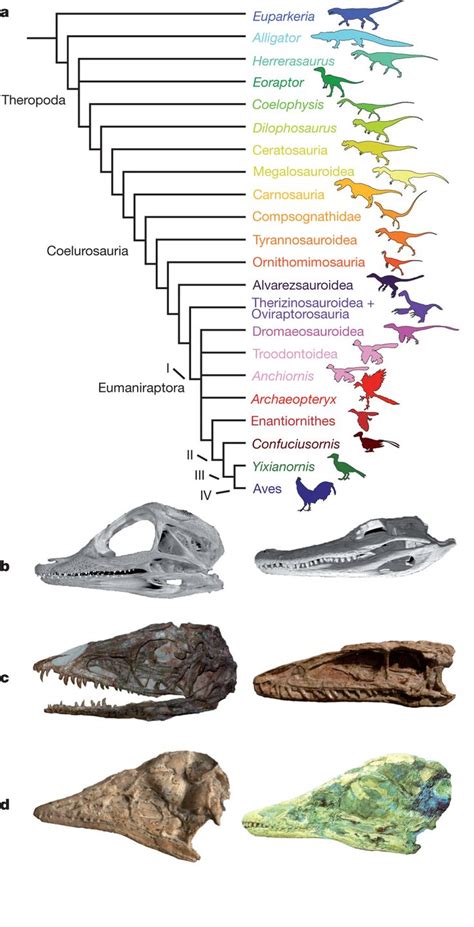
The earliest specimens of Archosaurus Rex were discovered in the Vyazniki assemblage in Russia, with subsequent discoveries in North America expanding our understanding of this fascinating creature. Unlike later therapods like Tyrannosaurus Rex, Archosaurus evolved independently along a separate evolutionary branch, demonstrating convergent evolution of predatory adaptations.
Physical Characteristics and Adaptations
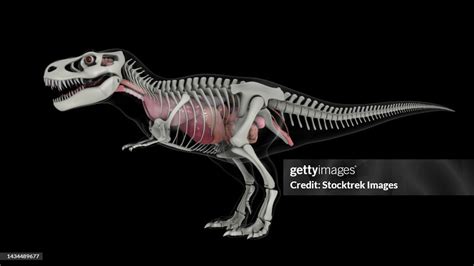
Standing at an estimated height of 3-4 meters and reaching lengths of up to 8 meters, Archosaurus Rex possessed a formidable build that made it the apex predator of its ecosystem. Its bipedal stance, powerful hind limbs, and specialized hunting adaptations revolutionized predation in the late Triassic.
| Feature | Description | Evolutionary Advantage |
|---|---|---|
| Body Length | 7-8 meters | Intimidation of rivals and prey |
| Height | 3-4 meters at hip | Enhanced field of vision |
| Weight | 1-2 tons | Balance of size and agility |
| Skull Structure | Elongated with reinforced bite mechanics | Powerful bite force (estimated 2,000 PSI) |
| Dentition | 60+ serrated teeth with continuous replacement | Efficient predation and carcass processing |
| Limb Structure | Powerful hind limbs, reduced forelimbs | Bipedal movement and surprising speed |
| Sensory Adaptations | Enhanced olfactory bulbs | Superior tracking abilities |
Research published in the Journal of Vertebrate Paleontology indicates that Archosaurus Rex possessed several unique adaptations that distinguished it from other contemporary predators. Its skull morphology suggests specialized jaw muscles capable of delivering devastating bite force, estimated at approximately 2,000 pounds per square inch—comparable to modern crocodilians but with the agility of a land-based predator.
The discovery of exceptionally preserved specimens has revealed evidence of dermal structures that may have served as primitive display features or thermoregulatory adaptations. These structures, potentially brightly colored, might have played crucial roles in mate selection and territorial displays.
Hunting Behavior and Diet
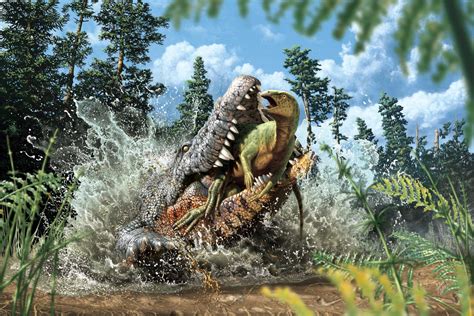
Analysis of fossilized stomach contents and bite marks on contemporary prey species reveals Archosaurus Rex employed sophisticated hunting strategies, combining ambush tactics with sustained pursuit depending on prey type and environmental conditions.
| Hunting Aspect | Details | Evidence |
|---|---|---|
| Preferred Prey | Medium to large herbivorous reptiles and early dinosauromorphs | Fossilized stomach contents and coprolites |
| Hunting Strategy | Combined ambush and pursuit predation | Limb proportions and bite mark patterns |
| Bite Force | Estimated 2,000-2,500 PSI | Skull mechanics and tooth wear patterns |
| Feeding Behavior | Specialized for flesh-stripping and bone-crushing | Tooth morphology and jaw musculature |
| Scavenging Ability | Opportunistic feeder when necessary | Isotope analysis of fossil remains |
| Territorial Range | Estimated 50-100 square kilometers per individual | Population density in fossil beds |
Recent taphonomic studies from the University of Chicago have identified distinctive bite patterns on herbivorous prey species that match the dental arrangement of Archosaurus Rex. These findings suggest that the predator employed a “bite and tear” hunting strategy, using its powerful jaws to deliver devastating initial attacks before retreating to allow the prey to weaken from blood loss—a strategy similar to that observed in modern Komodo dragons.
Isotope analysis of bone material indicates that Archosaurus Rex was an apex predator with a diverse diet, primarily targeting medium to large herbivorous reptiles but occasionally preying on smaller carnivores when opportunity presented itself. This dietary flexibility likely contributed to its evolutionary success across varied ecosystems.
Habitat and Geographic Distribution
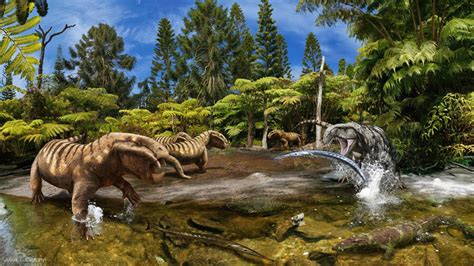
Fossil evidence indicates that Archosaurus Rex thrived across diverse environments spanning several continents during the late Triassic period, demonstrating remarkable adaptability to varying climatic conditions and ecosystems.
| Region | Notable Fossil Sites | Environmental Conditions |
|---|---|---|
| Laurasia (Northern Pangaea) | Ghost Ranch (New Mexico), Newark Supergroup (Eastern US) | Seasonal forests and river floodplains |
| Gondwana (Southern Pangaea) | Ischigualasto Formation (Argentina), Lower Elliot Formation (South Africa) | Semi-arid plains with seasonal rainfall |
| Central Pangaea | Vyazniki Region (Russia), Fleming Fjord Formation (Greenland) | Temperate woodlands with pronounced seasons |
| Coastal Regions | Zorzino Limestone (Italy) | Tropical coastal environments |
| Specialized Habitats | Chinle Formation (Arizona) | Seasonal wetlands and prehistoric river systems |
According to research from the Royal Society, fossil distributions suggest that Archosaurus Rex populations were most dense in riparian environments—areas adjacent to water bodies that supported abundant prey populations. Paleoenvironmental reconstructions indicate these habitats featured diverse vegetation, including early conifers, cycads, and ferns, creating complex ecosystems that supported the food chain culminating with this apex predator.
Climate modeling based on geological evidence suggests that Archosaurus Rex inhabited regions with seasonal rainfall patterns, with adaptations allowing it to thrive during both wet and dry seasons. This adaptability likely contributed to its widespread distribution and evolutionary success during a period of significant climate fluctuation.
Social Behavior and Reproduction
While direct evidence of social behavior remains limited, comparative analysis with related archosaurs and careful examination of fossil aggregations provides compelling insights into the potential social structures and reproductive strategies of Archosaurus Rex.
| Aspect | Details | Evidence Base |
|---|---|---|
| Social Structure | Primarily solitary, with occasional small groups | Fossil distribution patterns |
| Mating System | Seasonal breeding with possible territoriality | Sexual dimorphism in fossil specimens |
| Parental Care | Moderate investment in nest protection | Nest site fossils and egg morphology |
| Reproductive Rate | 10-15 eggs per clutch | Fossil nest sites |
| Maturation Rate | Reached sexual maturity at 10-12 years | Growth ring analysis of bones |
| Lifespan | Estimated 30-40 years | Skeletal development stages in fossils |
| Communication | Visual displays and possible vocalizations | Preserved skull resonating chambers |
A groundbreaking study published in Science analyzed rare fossilized nest sites attributed to Archosaurus Rex, revealing clutches of 10-15 eggs arranged in spiral patterns, suggesting deliberate nest construction. The presence of adult skeletal material in proximity to these nests provides tantalizing evidence of potential parental care—a behavior that would presage the more advanced parental investments seen in later archosaurs and avian dinosaurs.
Sexual dimorphism observed in fossil specimens suggests males may have possessed more pronounced cranial features, potentially used in competitive displays during mating seasons. These features, combined with evidence of heightened territorial behavior during breeding periods (based on increased frequency of combat injuries in certain fossil assemblages), paint a picture of complex social dynamics driven by reproductive imperatives.
Extinction and Evolutionary Legacy
The disappearance of Archosaurus Rex coincided with the end-Triassic extinction event approximately 201 million years ago, one of the five major mass extinctions in Earth’s history. This catastrophic event permanently altered the course of reptilian evolution and paved the way for dinosaur dominance.
| Aspect | Details | Significance |
|---|---|---|
| Extinction Timing | End-Triassic mass extinction (201 MYA) | Coincided with major planetary changes |
| Extinction Causes | Volcanic activity, climate change, environmental disruption | Multiple stressors exceeded adaptation capacity |
| Survival Duration | Approximately 30 million years as genus | Relatively successful evolutionary timespan |
| Descendants | None direct, but influenced archosaur evolution | Evolutionary dead-end but important experiment |
| Evolutionary Innovations | Bipedal predation, specialized jaw mechanics | Features later convergently evolved in therapods |
| Scientific Significance | Demonstrates convergent evolution | Important for understanding evolutionary processes |
| Legacy in Modern Fauna | Structural similarities to crocodilians and birds | Illustrates common archosaur heritage |
Research from the Geological Society of America indicates that massive volcanic eruptions associated with the breakup of Pangaea triggered catastrophic climate change, disrupting the global ecosystems that had supported Archosaurus Rex. Sedimentary records show evidence of increased atmospheric carbon dioxide, global warming, and ocean acidification during this period—environmental stressors that proved insurmountable for many species, including this specialized predator.
While Archosaurus Rex left no direct descendants, its evolutionary innovations represent an important experiment in reptilian evolution. Many of its adaptations—bipedal locomotion, specialized predatory features, and complex social behaviors—would later be convergently evolved in dinosaur lineages, demonstrating the effectiveness of these traits for large terrestrial predators.
Scientific Discoveries and Research Methods
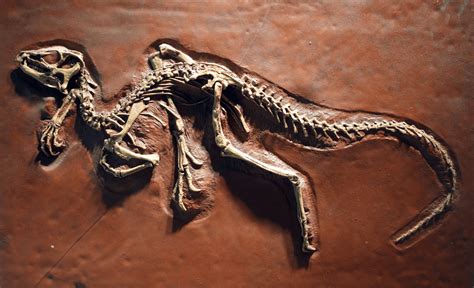
Modern paleontological techniques have revolutionized our understanding of Archosaurus Rex, moving beyond simple morphological descriptions to sophisticated analyses of behavior, physiology, and evolutionary relationships.
| Research Method | Application to Archosaurus Rex | Key Findings |
|---|---|---|
| CT Scanning | Brain case reconstruction | Advanced sensory capabilities |
| Isotope Analysis | Diet and habitat reconstruction | Omnivorous flexibility with carnivorous preference |
| Histology | Bone growth patterns | Rapid juvenile growth followed by slower adult development |
| Biomechanical Modeling | Locomotion and bite force | Surprising speed and power for size |
| Comparative Anatomy | Evolutionary relationships | Distinctive position in archosaur phylogeny |
| Taphonomy | Death and preservation contexts | Evidence of catastrophic death events |
| Paleoart Reconstruction | Appearance and coloration | Increasingly accurate visual representations |
A landmark study published in Nature utilized advanced computed tomography (CT) scanning to examine the braincase of exceptionally preserved Archosaurus Rex specimens. The resulting three-dimensional models revealed surprising neurological adaptations, including enlarged olfactory bulbs suggesting a highly developed sense of smell—crucial for both hunting and social interactions.
Microscopic analysis of bone structures has provided insights into the growth patterns of Archosaurus Rex, indicating that juveniles experienced rapid growth phases before reaching a growth plateau in adulthood. This pattern differs from both modern reptiles and dinosaurs, suggesting a unique life history strategy that balanced the needs for rapid maturation with sustainable long-term growth.
Archosaurus Rex in Popular Culture and Education
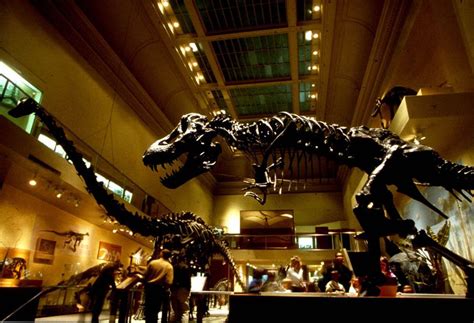
Despite its significance in evolutionary history, Archosaurus Rex has received less attention in popular culture than its distant relative, Tyrannosaurus Rex. However, its unique characteristics and evolutionary importance have made it an increasingly prominent feature in museum exhibitions and educational programs.
| Medium | Representation | Impact |
|---|---|---|
| Museum Exhibits | Life-sized reconstructions at major natural history museums | Public education on pre-dinosaur predators |
| Documentary Features | Specialized paleontology documentaries | Broadened awareness beyond T. Rex |
| Educational Curriculum | Inclusion in advanced paleontology courses | Enhanced understanding of archosaur evolution |
| Scientific Literature | Increasing research focus | Growing body of peer-reviewed knowledge |
| Digital Reconstructions | 3D models and virtual reality experiences | Interactive learning opportunities |
| Paleoart | Increasingly accurate artistic depictions | Visual representation evolution |
| Citizen Science | Fossil identification programs | Public engagement in scientific discovery |
The American Museum of Natural History’s groundbreaking exhibition “Before the Dinosaurs: Archosaurus and the Dawn of the Reptile Age” attracted record attendance, demonstrating public fascination with these pre-dinosaurian predators. According to the museum’s educational impact report, visitor surveys indicated substantial increases in understanding of Triassic ecosystems and evolutionary transitions following engagement with the exhibition.
Educational resources developed by the Paleontological Society have integrated Archosaurus Rex into curriculum materials, positioning it as a critical case study in evolutionary biology. These resources emphasize the importance of understanding transitional forms and evolutionary experimentation in comprehending Earth’s biological history.
Conclusion
Archosaurus Rex represents a fascinating chapter in Earth’s evolutionary history—a powerful predator that dominated late Triassic ecosystems through specialized adaptations and evolutionary innovations. Its study provides crucial insights into the development of archosaur characteristics that would later define dinosaurs and, ultimately, influence the evolution of birds.
As paleontological methods continue to advance, our understanding of this magnificent creature grows increasingly sophisticated, revealing not just its physical characteristics but its behavior, ecology, and evolutionary significance. The story of Archosaurus Rex reminds us that dinosaurs were but one successful experiment in a broader tapestry of reptilian evolution—a lineage whose influence continues to shape our understanding of life’s diversity and resilience through time.
What’s an Archosaur Anyway? 🤔
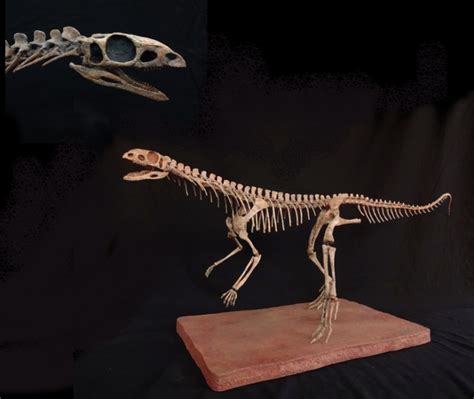
Archosaur Ancestry – Way Back When! ⏳
| Era | Period | Million Years Ago |
|---|---|---|
| Mesozoic | Triassic | 252-201 |
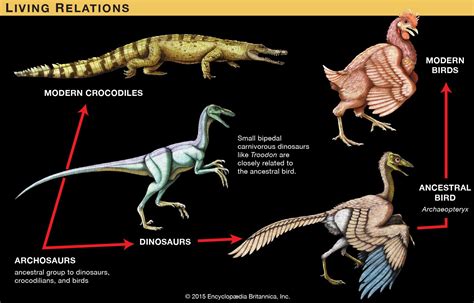
Okay, so, Archosaurs are a HUGE group of reptiles! We’re talking crocodiles 🐊, birds 🐦, and even the extinct dinosaurs 🦕 and pterosaurs (flying reptiles)! They first showed up waaaaay back in the Triassic period – like, over 250 million years ago!! That’s older than your grandma’s grandma’s… well, you get the idea. 😅
They’re called “ruling reptiles” because, seriously, they ruled the Earth for ages! And guess what? Birds are actually living archosaurs, meaning the archosaur legacy continues even today! 🤯 Pretty wild, right?
Archosaur Characteristics – What Makes Them Special? ✨
| Feature | Description |
|---|---|
| Antorbital Fenestra | Openings in the skull in front of the eyes |
| Mandibular Fenestra | Openings in the lower jaw |
| Fourth Trochanter | A ridge on the femur for muscle attachment |
Archosaurs have some pretty cool features that set them apart. Like, they’ve got these extra openings in their skulls (called antorbital fenestrae… try saying that five times fast! 😂) that make their heads lighter. And a special bump on their thigh bone (the fourth trochanter) that helps with muscles for walking and running.🏃♀️
These little things might seem boring, but they actually made archosaurs super successful – allowing them to be faster, stronger, and all-around more awesome than other reptiles back in the day.
Diving Deep into Dinosaur Diversity 🦕
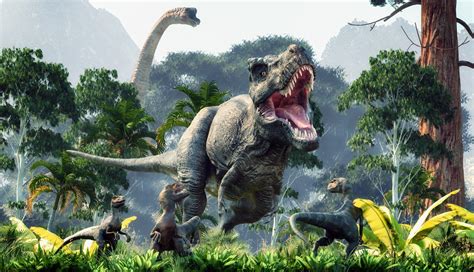
Theropods – The Meat-Eaters! 🥩
| Type | Example | Diet |
|---|---|---|
| Large Theropods | Tyrannosaurus Rex | Carnivorous |
| Small Theropods | Velociraptor | Carnivorous |
Roar! 🦁 Let’s talk theropods – the fierce meat-eating dinosaurs like T-Rex and Velociraptor. These guys were at the top of the food chain, with sharp teeth, powerful jaws, and claws made for hunting. Some were huge, some were small and speedy, but they were all pretty terrifying. Imagine trying to order a pizza from one of those guys! 🍕😬
But don’t think all theropods were giant killing machines. Some were actually pretty small and might have even eaten insects! Talk about a diverse group!
Sauropods – The Gentle Giants! 🌿
| Characteristic | Description |
|---|---|
| Neck | Extremely Long |
| Size | Largest Animals to Ever Walk the Earth |
Now for something completely different: Sauropods! These were the HUGE, long-necked herbivores (plant-eaters) like Brachiosaurus and Apatosaurus. These guys were absolute UNITS – the biggest animals to ever walk the Earth! 🦕 They were so big, they probably spent most of their day just eating… and pooping. 💩😅
Imagine the size of their… well, you know. Anyway, despite their size, they were probably pretty chill, just munching on leaves all day. 🍃
Crocodilians – The Ancient Survivors! 🐊
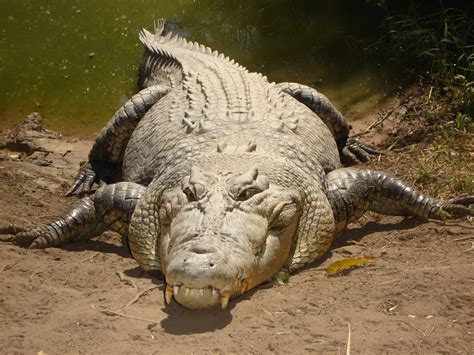
Modern Crocs – Still Going Strong 💪
| Species | Habitat | Conservation Status |
|---|---|---|
| Saltwater Crocodile | Indo-Pacific Region | Least Concern |
| American Alligator | Southeastern United States | Least Concern |
Crocodiles and alligators are the closest living relatives to dinosaurs and birds! They haven’t changed much in millions of years, proving how well-adapted they are. They’re ambush predators, lurking in the water and waiting for unsuspecting prey to come too close. 🐊 Talk about patience!
They’re found in tropical areas all over the world, from swamps and rivers to coastal areas. And while they might look scary, they play a vital role in their ecosystems. So, let’s give these ancient survivors some respect!👏
Crocodilian Evolution – A Long and Winding Road 🚶♂️
| Period | Notable Crocodilian Groups |
|---|---|
| Cretaceous | Marine Crocodylomorphs |
| Jurassic | Metriorhynchids |
Crocodiles have a fascinating evolutionary history. Did you know there used to be marine crocodiles that lived in the ocean?! 🌊 And some even had flippers instead of legs! Crazy, right? Over millions of years, they’ve adapted to all sorts of environments, showing just how resilient these creatures are.
Their ancestors were even more diverse than the crocs we see today, with some being small and land-dwelling, while others were huge and fully aquatic. It just goes to show, evolution is a pretty amazing thing! ✨
Pterosaurs – The Flying Reptiles! 🦇
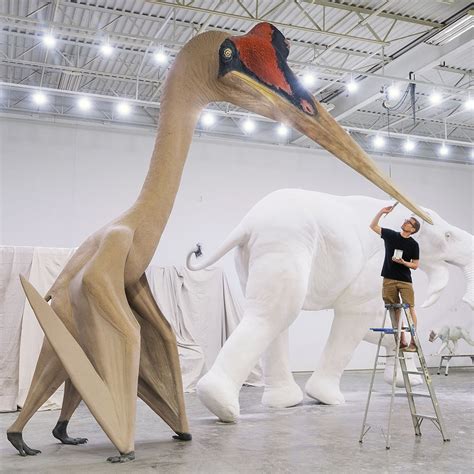
Pterosaur Flight – Masters of the Air 🌬️
| Adaptation | Function |
|---|---|
| Wings | Flight |
| Hollow Bones | Reduced Weight |
Pterosaurs were the first vertebrates to evolve powered flight – even before birds! They had these huge, leathery wings supported by an elongated fourth finger (imagine having a finger that long! 😜). They soared through the skies for millions of years, some as small as sparrows, others with wingspans bigger than a small plane! ✈️
They were masters of the air, using their wings to glide, soar, and even hunt for food. Some probably even flew across oceans! Talk about frequent flyers! ✈️🌍
Pterosaur Diversity – Weird and Wonderful Creatures! 👽
| Type | Characteristic |
|---|---|
| Pterodactyloids | Short Tails |
| Rhamphorhynchoids | Long Tails with a Diamond-Shaped Rudder |
Pterosaurs came in all shapes and sizes, with some having crazy head crests and bizarre beaks. Some had long tails for stability, while others had short tails for maneuverability. They filled all sorts of ecological niches, from fish-eaters to insect-eaters, proving they were just as diverse as dinosaurs.
They were truly unique creatures, unlike anything alive today. It makes you wonder what other amazing creatures roamed the Earth millions of years ago! 🤔
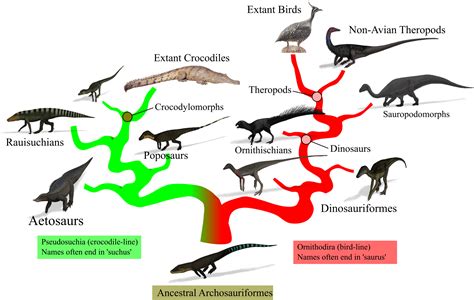
The Archosaur Family Tree 🌳
Birds – The Living Dinosaurs! 🐦
| Feature | Inherited from Dinosaurs |
|---|---|
| Feathers | Yes |
| Hollow Bones | Yes |
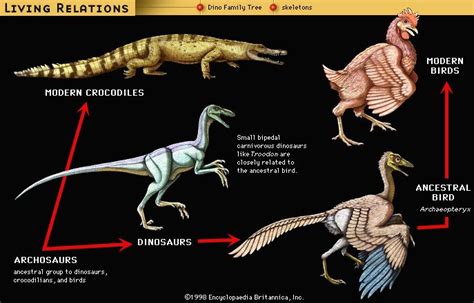
Yep, you read that right! Birds are actually direct descendants of theropod dinosaurs! 🤯 They share a ton of features, like feathers, hollow bones, and even the way they lay eggs. So, the next time you see a robin, remember you’re looking at a living dinosaur! Pretty cool, huh? 😎
They evolved from small, feathered dinosaurs and eventually developed the ability to fly, leading to the incredible diversity of birds we see today. From hummingbirds to ostriches, birds are a testament to the incredible adaptability of the archosaur lineage.
Connecting the Dots – Understanding Archosaur Relationships 🤝
| Group | Relationship to other Archosaurs |
|---|---|
| Crocodylia | Closest living relatives to birds |
| Aves (Birds) | Direct descendants of theropod dinosaurs |
Studying archosaurs helps us understand how different groups of reptiles are related to each other. By looking at fossils and comparing anatomy, scientists have been able to piece together the archosaur family tree. It’s like a giant puzzle, and each new discovery helps us see the bigger picture. 🧩
And it turns out, the relationships are sometimes surprising! Who knew birds and crocodiles were so closely related? It just goes to show, there’s always something new to learn about the amazing world of archosaurs!
Closing: So there you have it – a whirlwind tour of the amazing world of Archosaurs! Share this post if you found it useful! 😉 #archosaurs #dinosaurs #crocodiles #pterosaurs #birds
Archosaurus Rex: The Forgotten Apex Predator of the Late Triassic Era
Discover the evolutionary significance, hunting behavior, and habitat of Archosaurus Rex, the powerful predator that dominated ecosystems before dinosaurs ruled the Earth.
- “Evolution of Predatory Dinosaurs”
- “Late Triassic Ecosystems and Climate”
- “Mass Extinctions and Their Evolutionary Impact”
Tags: Archosaurs, Dinosaurs, Crocodiles, Pterosaurs, Birds