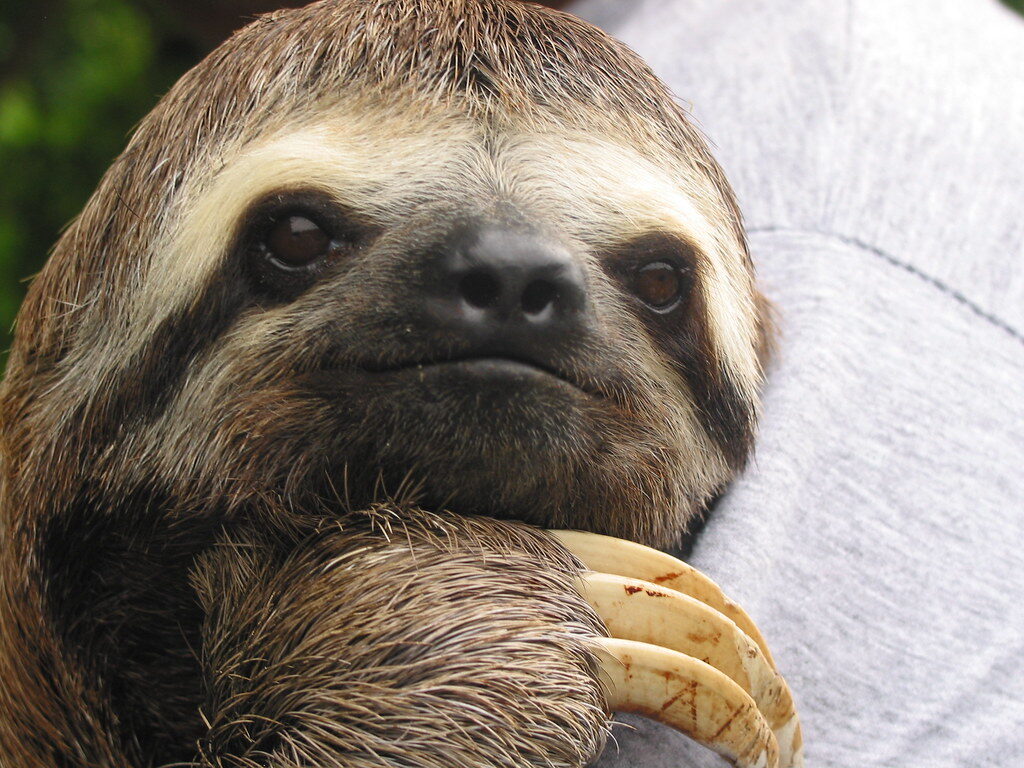
🦥 Masters of Slow: An Encyclopedia of the Amazonian Sloth
An exhaustive 50-chapter documentation dissecting the biology, incredibly slow metabolism, camouflage techniques, and canopy ecology of the sloths.
✏️ Written & Curated by the Atechsur.org Mammalogy Team | Last Updated: March 31, 2026

The Sloth is one of the most uniquely adapted mammals on Earth. Evolving a life strategy based almost entirely on doing as little as possible, these arboreal creatures dominate the canopies of Central and South America, particularly the vast expanse of the Amazon Rainforest.
This 50-chapter encyclopedia offers a deep dive into their lethargic world. We will explore the vital differences between two-toed and three-toed sloths, their bizarre digestive systems, their microscopic symbiotic ecosystems hidden in their fur, and why moving slowly is actually a masterclass in predator evasion.
- Suspensory Lifestyle: Sloths are the only mammals on Earth whose internal organs are attached to their rib cage, preventing them from crushing their lungs while hanging upside down.
- Symbiotic Fur: Their hair is grooved and hosts symbiotic green algae, providing perfect visual camouflage against predators like the Harpy Eagle.
- Surprising Swimmers: Despite their clumsiness on land, sloths are excellent swimmers and will occasionally drop into rivers to cross to new territories.
- The Bathroom Trek: Three-toed sloths risk their lives by climbing down to the forest floor only once a week to defecate, a behavior still debated by scientists.
Part I: Taxonomy, Evolution, and Species (Chapters 1-10)
 1. The Xenarthran Superorder
Sloths belong to the superorder Xenarthra, an ancient group of placental mammals entirely unique to the Americas. They share this lineage with anteaters and armadillos.
The term Xenarthra comes from Greek meaning “strange joints,” referring to the unique extra articulations in their lumbar vertebrae. This ancient lineage split from other mammals roughly 60 million years ago, making sloths some of the oldest indigenous mammals of South America.
2. The Suborder Folivora
Within Xenarthra, sloths are classified in the suborder Folivora, which translates directly to “leaf eaters.” While their ancestors were incredibly diverse, modern sloths are highly specialized for a purely arboreal, folivorous lifestyle.
Interestingly, modern tree sloths are not a single, closely related group. The two surviving families evolved their arboreal, upside-down lifestyle independently from different lines of ground-dwelling ancestors through convergent evolution.
 3. The Three-Toed Sloths (Bradypodidae)

Photographed in Soberania National Park. Notice the distinct dark facial mask and the three visible claws on the front limb.
The family Bradypodidae contains four species of three-toed sloths. They are generally smaller, slower, and have a more restricted, strictly leaf-eating diet compared to their two-toed cousins.
Anatomically, they possess three long, curved claws on their front limbs. They are also famous for their extra neck vertebrae (up to 9, compared to the mammalian standard of 7), allowing them to turn their heads up to 270 degrees to scan the canopy without moving their bodies.
 4. The Two-Toed Sloths (Megalonychidae)

A captive specimen displaying the distinct two claws on its front limbs and a more pig-like snout.
The family Megalonychidae contains two species of two-toed sloths. The name is a misnomer; all sloths have three toes on their hind legs. The distinction lies in their front limbs, which have only two claws.
Two-toed sloths are slightly larger, significantly faster, and more aggressive than three-toed sloths. They also have a broader diet, occasionally eating fruit, insects, and even small lizards, making them slightly more adaptable to changing environments.
 5. Geographic Range of the Three-Toed

They occupy a vast stretch from Central America down through the Amazon Basin into Brazil.
The geographic range of three-toed sloths, particularly the Brown-throated sloth, is vast. They are found from Honduras in Central America, all the way down through the heart of the Amazon basin in Brazil, Peru, and Colombia.
They are strictly tied to dense rainforest environments where the canopy is continuous, as they cannot jump from tree to tree and are highly vulnerable if forced to cross open ground.
 6. Geographic Range of the Two-Toed

Two-toed sloths share much of this Neotropical range, deeply concentrated in the Amazon basin.
The two species of two-toed sloths (Linnaeus’s and Hoffmann’s) also inhabit the Neotropics. Their range overlaps significantly with the three-toed sloths, sharing the same canopy space in countries like Brazil, Venezuela, and Costa Rica.
Because they are slightly more omnivorous, they can survive in slightly more fragmented or degraded forests compared to the strictly folivorous three-toed sloths, though they still require substantial tree cover.
7. The Extinct Ground Sloths (Megatherium)
The small, slow, arboreal sloths we see today are merely the surviving remnants of a much grander evolutionary lineage. During the Pleistocene epoch, the Americas were dominated by Giant Ground Sloths.
The most famous, Megatherium, could reach the size of a modern elephant, weighing up to 4 tons. These massive herbivores walked on the ground, using their massive claws to hook down branches. They went extinct relatively recently (around 10,000 years ago), likely due to a combination of climate change and hunting by early humans.
 8. The Origin of the Name “Sloth”

A 1904 print by James Ensor. The animal was named after the human vice of laziness.
The animal was named by early European explorers who were baffled by its extreme lethargy. They named it after one of the Seven Deadly Sins: Sloth (meaning laziness or reluctance to work).
In many other languages, the naming convention is similar. In Spanish, it is called Perezoso (lazy), and in French, Paresseux. While these names carry a negative human connotation, the sloth’s slowness is actually a highly successful evolutionary strategy, not a flaw.
 9. Cultural Misunderstandings in Early Science

Early European naturalists viewed the animal through the lens of human morality, often describing it as a wretched, miserable creature.
Early European naturalists, looking through the lens of human morality and industry, deeply misunderstood the sloth. Georges-Louis Leclerc, Comte de Buffon, a prominent 18th-century naturalist, described them as the “lowest term of existence,” claiming they were flawed creatures destined for extinction.
It wasn’t until modern ecological studies in the 20th century that science recognized the sloth’s slow metabolism and lack of movement as brilliant adaptations to a low-calorie diet and a canopy filled with motion-detecting predators.
 10. Artistic Depictions of Sloth

A French print from circa 1621. The animal’s reputation for lethargy has long fascinated artists and writers.
The concept of “sloth” as a vice heavily influenced early illustrations of the animal, often depicting them as grotesque, sluggish beasts. It took decades of field biology to rehabilitate the animal’s image.
Today, the sloth has experienced a massive cultural shift. From being viewed as a biological failure in the 1800s, they have become internet sensations and beloved symbols of relaxation and a stress-free lifestyle in modern pop culture.
Part II: Physiology of Slow Motion (Chapters 11-20)
 11. The Lowest Metabolism of Any Mammal
The secret to the sloth’s survival is its incredibly slow metabolic rate. Three-toed sloths possess the lowest metabolic rate of any non-hibernating mammal, operating at less than half of what is expected for a creature of their size.
Because they eat canopy leaves—which are notoriously low in calories and nutrients—they simply do not have the fuel to move quickly or maintain a high body temperature. By turning down their internal engines, they can survive on a meager diet that would starve a monkey of similar size.
12. Reduced Muscle Mass
To further conserve energy, sloths have sacrificed muscle. They possess only about 25% to 30% of the muscle mass of a typical mammal of their weight.
This lack of muscle makes them incredibly weak when it comes to explosive movement or walking on the ground (where they are forced to drag themselves on their bellies). However, their specialized muscles are highly efficient at resisting fatigue, allowing them to hang perfectly still for hours without getting tired.
 13. Variable Body Temperature

Sloths must move into the sun to raise their body temperature, acting almost like cold-blooded reptiles.
Unlike humans who maintain a strict internal body temperature of 98.6°F, a sloth’s body temperature can fluctuate wildly depending on the environment. They have poor thermoregulation.
On cold nights, their core temperature drops to save energy. In the morning, they will slowly climb to the upper canopy to bask in the sun and warm up, acting much like a cold-blooded reptile. This fluctuation allows them to save immense amounts of caloric energy that would otherwise be spent generating body heat.
14. The Multi-Chambered Stomach
A sloth’s stomach is massive and highly complex, resembling the multi-chambered stomach of a cow. It can account for up to 30% of the animal’s total body weight when full.
This massive organ is essentially a fermentation vat. It houses a specialized microbiome of symbiotic bacteria that slowly break down the tough cellulose and toxins found in rainforest leaves. Digestion is so slow that a single meal can take up to a month to pass through their system.
15. Anchored Internal Organs
Sloths spend the vast majority of their lives hanging upside down. For most mammals, doing this constantly would cause their heavy stomach and liver to press down on their lungs, making breathing difficult and expending energy.
To solve this, sloths have evolved unique fibrinous adhesions that physically anchor their internal organs to their lower ribs. This internal “seatbelt” holds their heavy, leaf-filled stomachs in place, keeping the weight off their diaphragm and allowing them to breathe effortlessly while inverted.
16. The Ultimate Hooks: Sloth Claws
The claws of a sloth (two or three depending on the species) are not actually claws; they are elongated, specialized finger bones protruding from the hand.
These bony hooks are 3 to 4 inches long and are designed to function like meat hooks. They hook over a branch, allowing the sloth to hang without using any muscular grip strength. A sloth’s grip is so strong and passive that they have been known to remain hanging from a branch even after they have died.
17. The Extra Neck Vertebrae
Almost all mammals, from a mouse to a giraffe, have exactly seven cervical (neck) vertebrae. Three-toed sloths break this biological rule entirely, possessing eight or nine neck vertebrae.
This evolutionary anomaly grants them incredible flexibility. They can rotate their heads up to 270 degrees. Because moving their entire body costs precious energy and draws the attention of predators, this flexibility allows them to scan the canopy below them for predators or spot fresh leaves while remaining perfectly still.
 18. Upside-Down Fur Design

Unlike other mammals, a sloth’s hair parts on its belly and grows toward its back to shed heavy tropical rain.
Because sloths spend most of their time hanging upside down, their fur has evolved to accommodate this posture. In most mammals, hair grows from the back toward the belly. In sloths, the hair parts down the middle of the belly and grows toward the back.
This reverse growth pattern ensures that the torrential downpours of the Amazon rainforest run smoothly off their bodies, keeping the skin underneath relatively dry and preventing them from losing precious body heat.
 19. The Danger of the Ground

Lacking the muscle to support their weight, sloths must drag themselves across the earth, highly vulnerable to predators.
While masterful climbers, sloths are nearly helpless on the ground. Their weak hind legs cannot support their body weight, forcing them to drag themselves forward using their front claws.
On the forest floor, they are extremely vulnerable to terrestrial predators like Ocelots, Jaguars, and feral dogs. They only descend to the ground for two reasons: to cross to a new tree if the canopy is broken, or to execute their bizarre weekly bathroom ritual.
20. Surprisingly Excellent Swimmers
Despite their clumsiness on the dirt, sloths are surprisingly proficient and buoyant swimmers. Their massive, gas-filled stomachs act like built-in flotation devices.
In the flooded forests of the Amazon, if a sloth needs to reach a new territory, it will often simply drop directly from a branch into the river. They swim using a rudimentary doggy-paddle, moving up to three times faster in the water than they do in the trees, though they must cross quickly to avoid caimans and anacondas.
Part III: The Walking Ecosystem (Chapters 21-30)
21. Symbiotic Green Algae
A wild sloth often has a distinct greenish tint to its fur. This is not its natural hair color, but rather a species of green algae (Trichophilus welckeri) that grows exclusively in the deep grooves and cracks of the sloth’s individual hair shafts.
This relationship is highly symbiotic. The thick, damp fur provides a perfect micro-habitat for the algae to bloom. In return, the green algae provides the sloth with exceptional visual camouflage, helping it blend perfectly into the mossy, leafy background of the canopy to hide from eagles.
22. Algae as a Snack
Recent studies suggest the symbiotic relationship with algae goes beyond camouflage. Sloths have been observed licking their own fur and the fur of their offspring.
The algae is highly lipid-rich (full of fats) and easily digestible. In a diet otherwise consisting of nutrient-poor, hard-to-digest leaves, consuming the algae growing on their own backs acts as a vital caloric and nutritional supplement, essentially allowing the sloth to grow its own mobile snack.
 23. The Sloth Moth
The sloth’s fur is a bustling city. The most famous resident is the Sloth Moth (Cryptoses choloepi). These moths live their entire adult lives hidden deep within the sloth’s thick fleece, feeding on skin secretions and the algae.
A single sloth can carry over 100 of these moths. When a bird attempts to pluck a moth from the fur, the moth simply scurries deeper into the dense hair where the bird cannot reach it. The moths only leave the sloth for one very specific, dangerous reason.
24. The Dangerous Bathroom Ritual
Despite being perfectly capable of defecating from the safety of the canopy (like monkeys do), three-toed sloths undertake a perilous journey once a week. They climb all the way down to the base of their tree.
Once on the ground, they dig a small hole with their tail, defecate (losing up to a third of their body weight in one go), cover the hole with leaves, and slowly climb back up. This brief ground visit accounts for over half of all sloth deaths, as they are easily picked off by jaguars and ocelots.
25. The Moth-Sloth Symbiosis
Why risk death just to poop on the ground? The prevailing scientific theory centers on the Sloth Moths. When the sloth descends to defecate, the pregnant female moths rush off the fur and lay their eggs directly onto the fresh dung.
The moth larvae feed on the dung, hatch into adults, and fly up to colonize the canopy sloths. In return, when the moths die inside the sloth’s fur, they decompose, releasing nitrogen that acts as a potent fertilizer for the sloth’s symbiotic green algae. It is a complex, dangerous, three-way agricultural arrangement.
26. Beetles, Ticks, and Mites
Moths are not the only residents. A single sloth can act as a mobile ecosystem for specialized species of beetles, ticks, and mites, many of which are found nowhere else on earth except in sloth fur.
A single individual was once found harboring nearly 1,000 beetles of the genus Trichilium. These insects feed on the dead skin cells and algae in the fur, keeping the heavy coat clean while taking advantage of the safe, predator-free environment deep within the fleece.
27. Defenses Against Predators
While sloths rely primarily on crypsis (remaining unseen) and slow movement to avoid predators like the Harpy Eagle, they are not completely defenseless if cornered.
If grabbed, a sloth will lash out with surprising speed using its powerful, hooked front claws, capable of inflicting deep, severe lacerations. They also possess sharp teeth and can deliver a nasty bite. However, their best defense is their incredibly tough skin and fur, which is thick enough to resist minor bites and scratches.
28. Reproduction and Mating Calls
Sloths are solitary creatures, only coming together to mate. When a female three-toed sloth goes into estrus, she initiates courtship by emitting a loud, high-pitched scream that sounds remarkably like a human woman yelling “ay ee.”
Males in the vicinity will slowly make their way toward the sound. If multiple males arrive, they will fight over the female by hanging from branches by their hind legs and swiping at each other with their front claws until one retreats.
29. Raising the Young
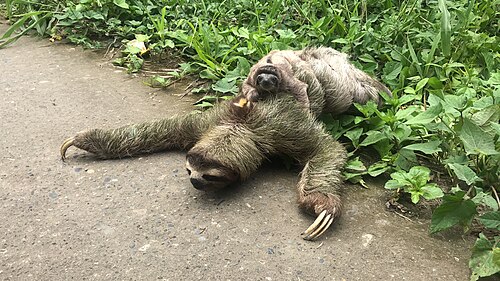
The infant clings to the mother’s chest for up to six months, learning the specific map of safe, edible trees in her territory.
Gestation lasts for about six months. The mother gives birth while hanging upside down. The single baby is born fully furred, with its eyes open, and immediately crawls up the mother’s belly to cling tightly to her fur.
The infant will nurse and ride on the mother’s chest for six to nine months. During this time, it learns exactly which leaves are safe to eat in their specific home range by tasting what the mother eats and acquiring her specific gut bacteria.
30. Leaving the Territory
Unusually, when it is time for the young sloth to become independent, it is the mother who leaves. She will simply vacate her established territory, leaving the young sloth in the safety of a home range it already knows intimately.
This ensures the juvenile has a guaranteed food supply of specific trees it knows how to digest, increasing its chances of survival, while the experienced mother sets off to find a new territory.
Captive sloths sleep up to 15 hours a day, but EEG studies on wild sloths reveal they only sleep around 9.6 hours, utilizing the rest of the time to slowly forage.
Male three-toed sloths possess a prominent speculum (a patch of bright orange/yellow fur with a dark stripe) on their backs, which secretes oils to mark branches.
Sloths exhibit incredible resilience to infections and physical trauma; deep lacerations from predators often heal completely without getting infected in the bacteria-rich jungle.
Sloths have very poor visual acuity and lack a fovea. They navigate their canopy world relying heavily on their excellent sense of smell and spatial memory.
In fragmented forests near human settlements, sloths frequently mistake uninsulated power lines for vines, resulting in horrific electrocutions.
Two-toed sloths are slightly more active because they eat a wider variety of foods, including fruits and bird eggs, providing more caloric energy than just leaves.
Sloths rarely drink standing water; they receive almost all their necessary hydration from the moisture content in the leaves they consume and licking dew.
While the giant, active ground sloths went extinct, the small, slow arboreal sloths survived, proving that “survival of the fittest” sometimes means surviving by doing the absolute minimum.
Researchers have identified novel strains of fungi living in sloth hair that produce powerful compounds capable of fighting human breast cancer cells and malaria.
To conserve oxygen and energy, a sloth can slow its heart rate down to roughly one-third of its normal pace when holding its breath underwater.
A critically endangered species endemic to a single tiny island off the coast of Panama, having undergone insular dwarfism.
Because they cannot jump across gaps, clear-cutting for agriculture traps sloths in isolated patches of trees, leading to starvation and genetic bottlenecking.
Baby sloths are often violently stolen from their mothers to be sold as exotic pets or used as captive photo-props for tourists.
Organizations across Costa Rica and Brazil are dedicated to rescuing electrocuted and orphaned sloths, rehabilitating them for release back into protected reserves.
In many regions, sloths show a strong preference for Cecropia trees, likely due to their high water content and specific nutrient profiles.
Historical texts painted sloths as biological failures; modern science now views them as masters of energy efficiency and highly successful specialists.
Sloths have no incisors or true canines. They rely on peg-like cheek teeth that continuously grow and wear down against each other to grind tough leaves.
Found in the Atlantic coastal forests of Brazil, this species is highly threatened and distinct for the long black mane of hair around its neck and shoulders.
Researchers fit wild sloths with tiny radio “backpacks” to track their incredibly slow, localized movements and understand their home range requirements.
Why are sloths so slow?
Their diet of leaves provides very few calories. To survive on such a poor diet, they evolved an incredibly slow metabolism and reduced muscle mass. Moving slowly also helps them stay invisible to predators like eagles.
Are sloths bears or monkeys?
Neither. Sloths are part of the superorder Xenarthra, making their closest living relatives anteaters and armadillos.
Why do they climb down to poop?
Scientists believe it maintains a symbiotic relationship with “sloth moths” that live in their fur. By laying eggs on the fresh dung, the moth lifecycle continues, and when the moths die in the fur, they provide fertilizer for the green algae that camouflages the sloth.
Explore our trusted network of partner websites covering directories, encyclopedias, marketplaces, education, and finance.
- This digital encyclopedia is created solely as an educational reference material detailing the ecological behaviors and biology of the sloth.
- All included image multimedia content is distributed from the free open-license directory (GNU/Creative Commons Attribution) belonging to the worldwide Wikimedia Commons database.
- Ecological statistics and evolutionary data discussed are based on scientific consensus within the zoological and mammalogy communities.
About the Drafting Team: Atechsur.org Biology Experts
The scientific biology editorial board of Atechsur.org proactively provides accurate, in-depth scientific reports with a dedication to engaging, humanistic language to foster a deeper understanding of Neotropical mammals and rainforest conservation.
© 2026 – Atechsur.org – Complete Sloth Encyclopedia (Chapters 1 – 50)
Suborder Folivora • Neotropical Fauna • Updated: March 31, 2026